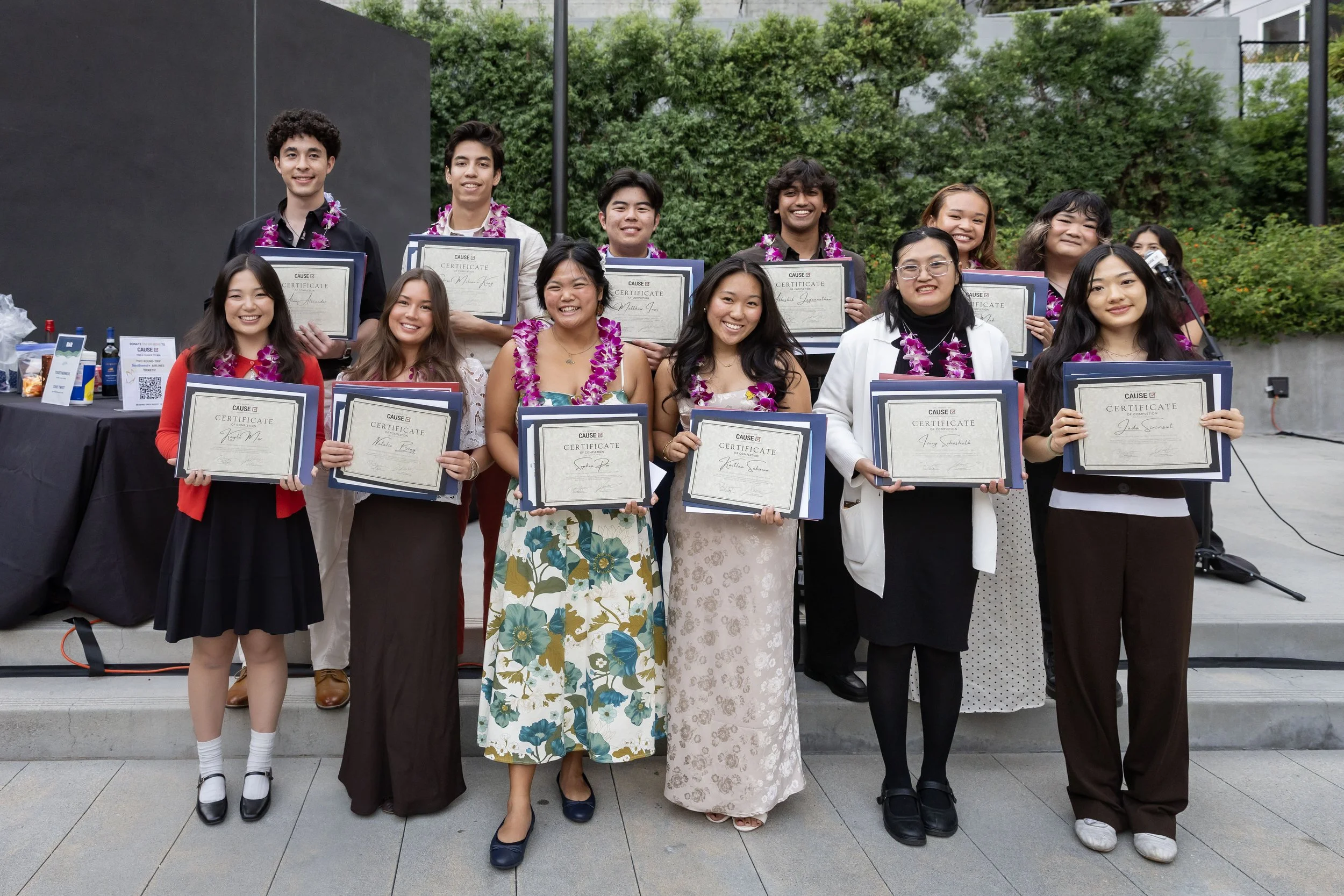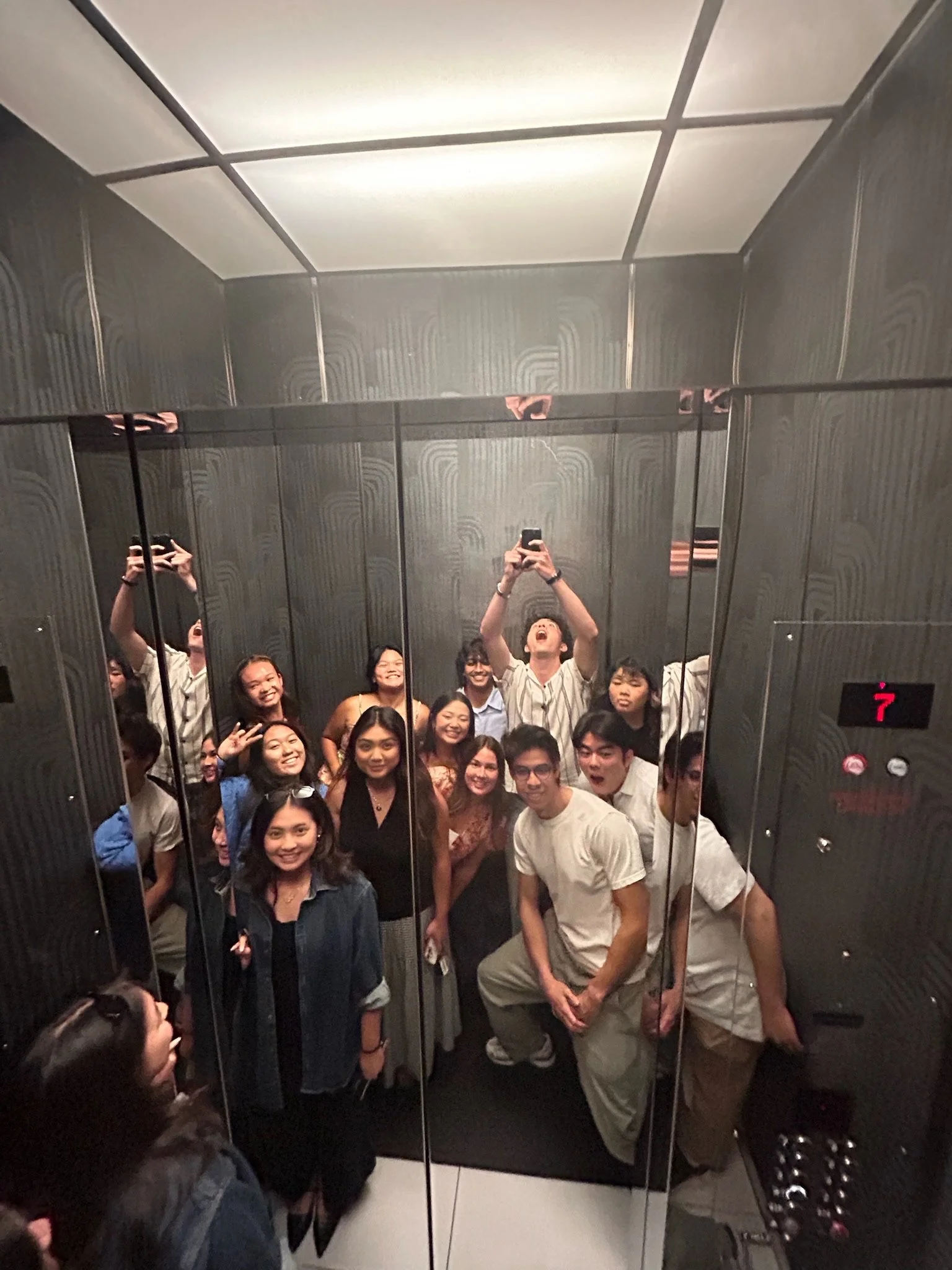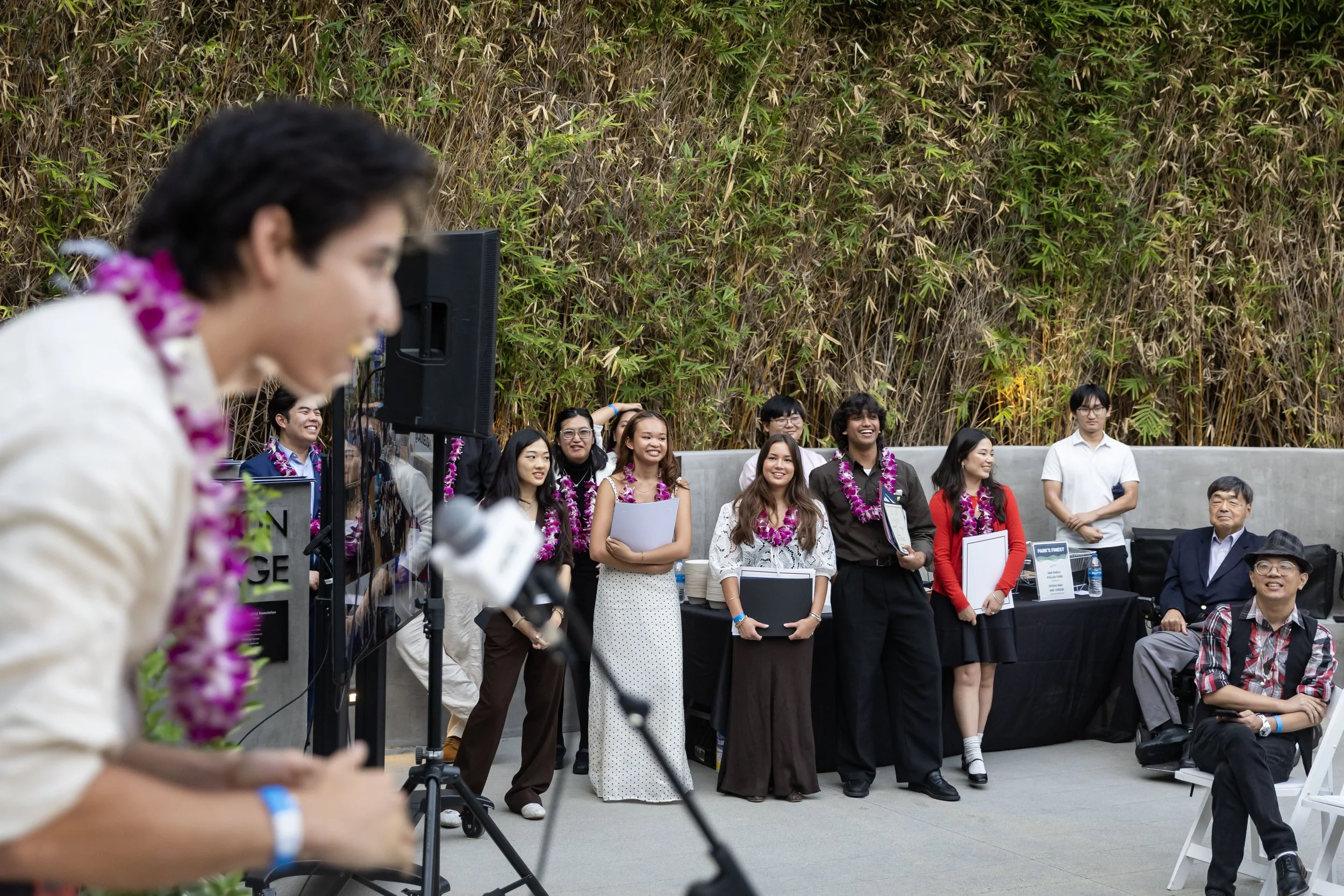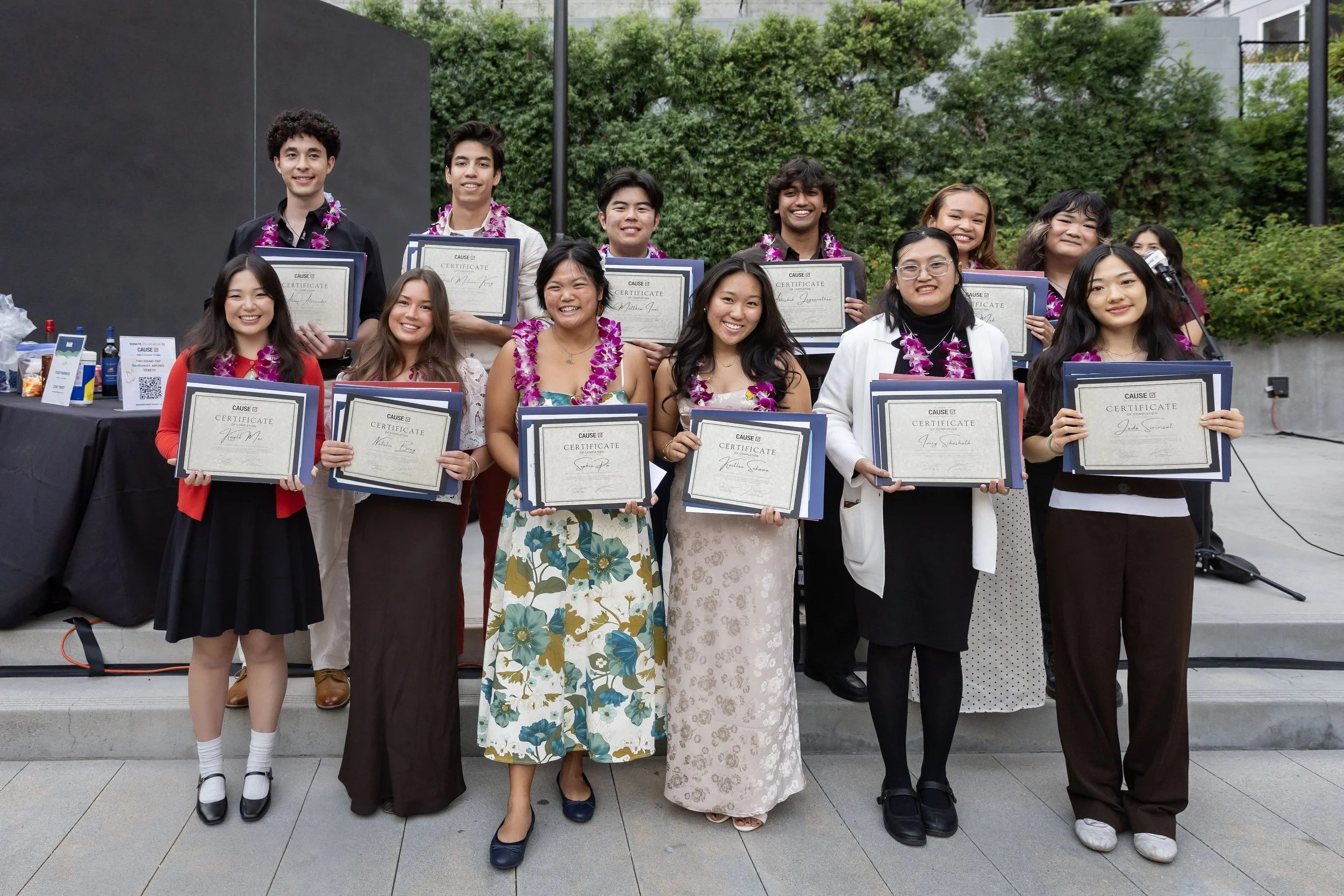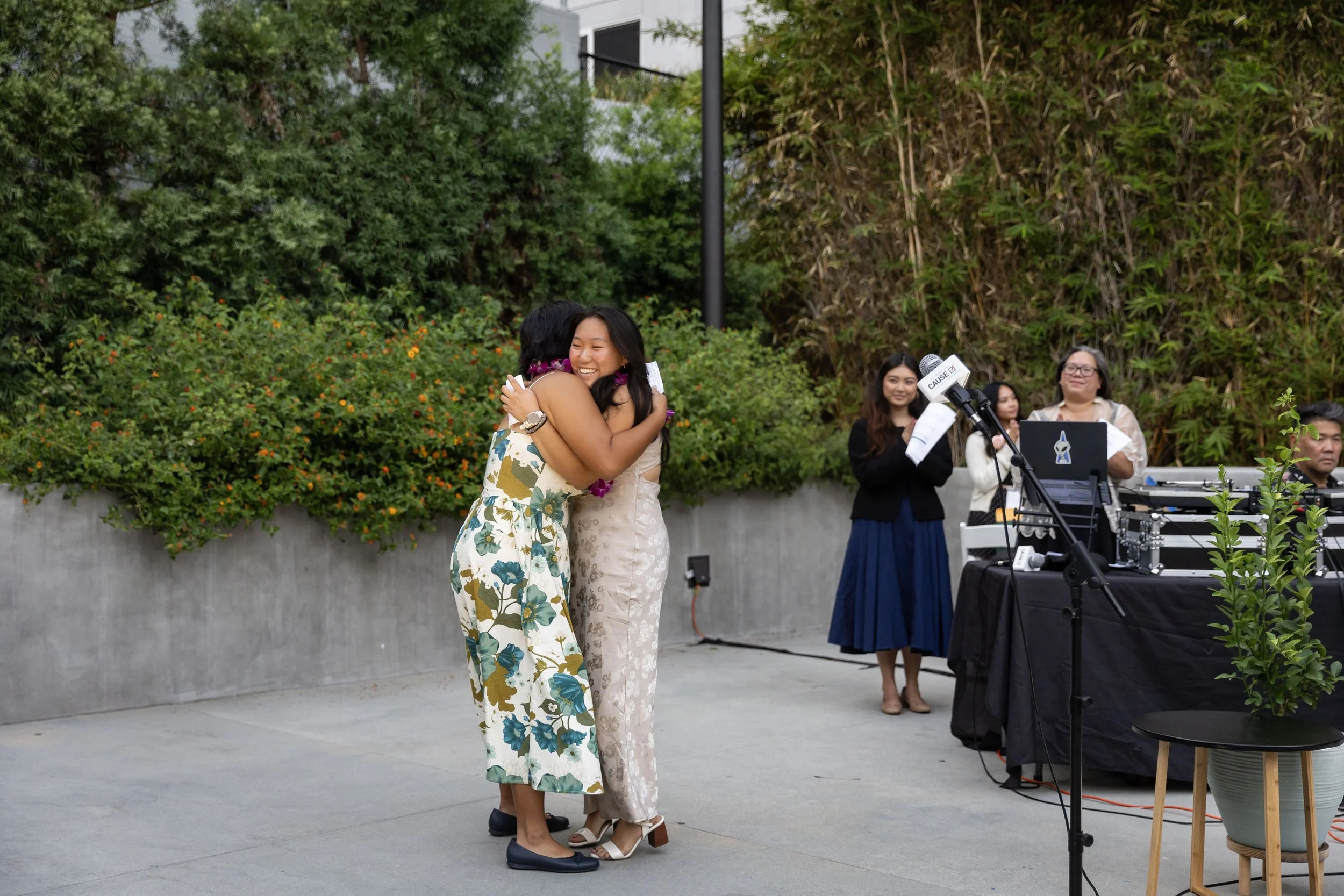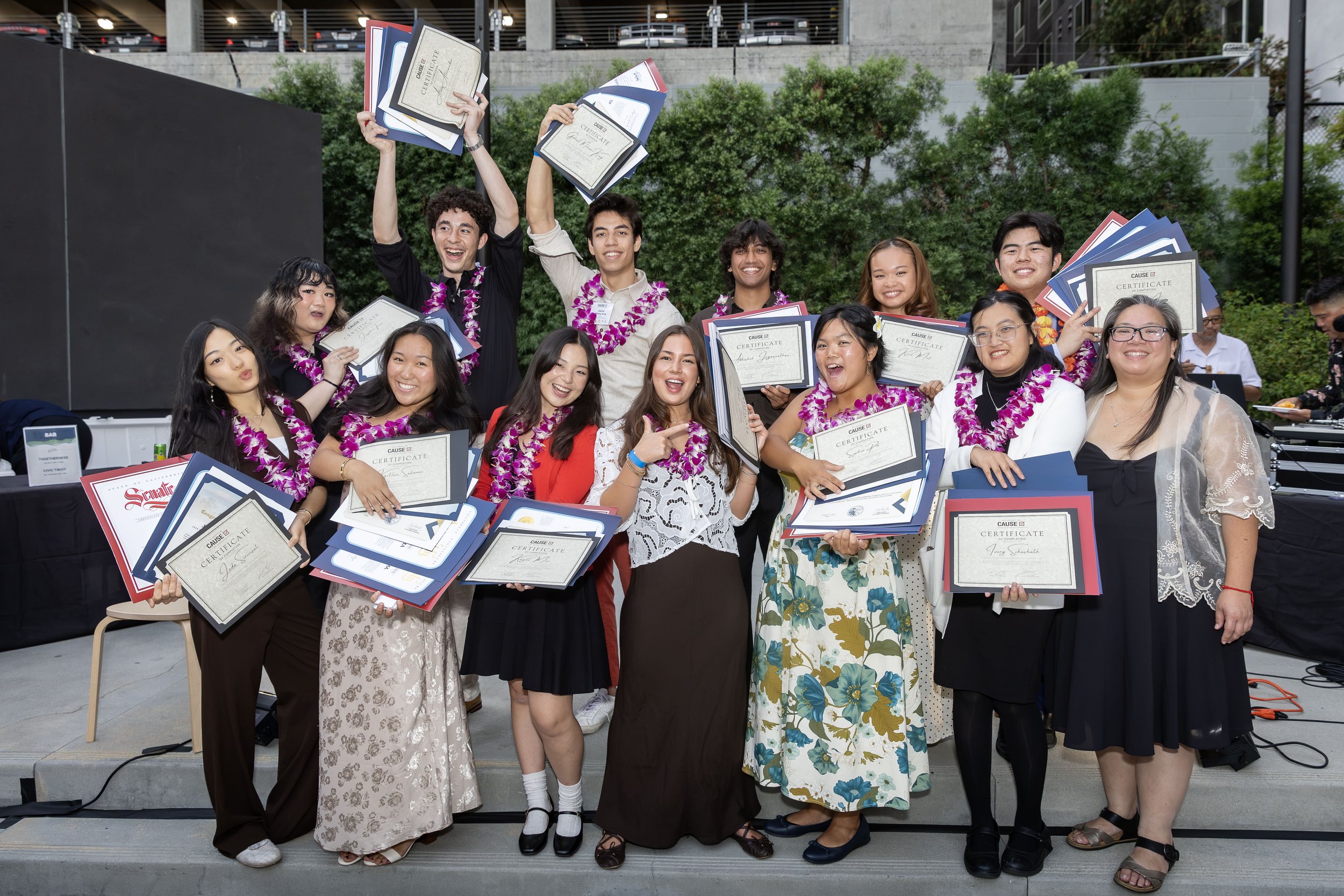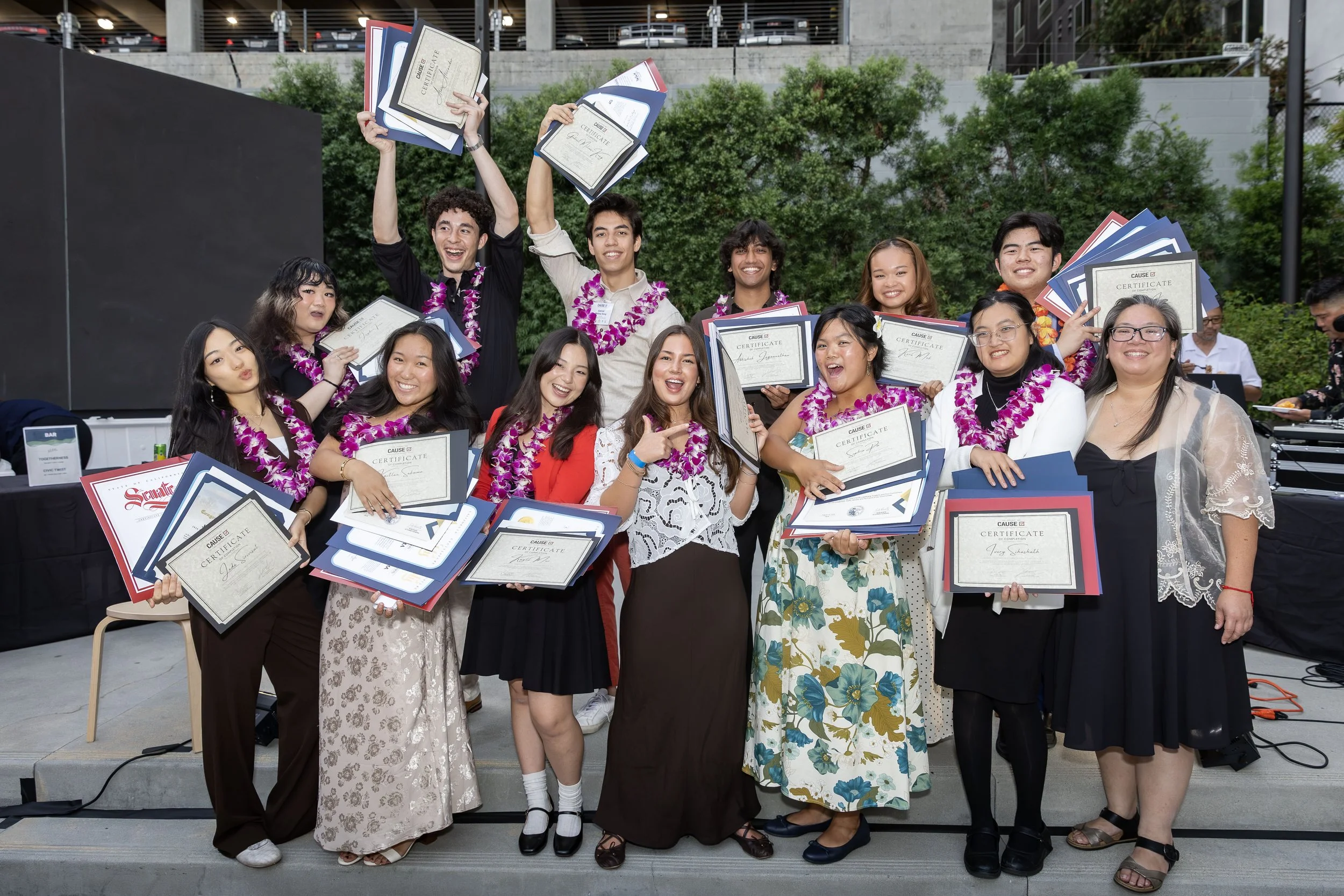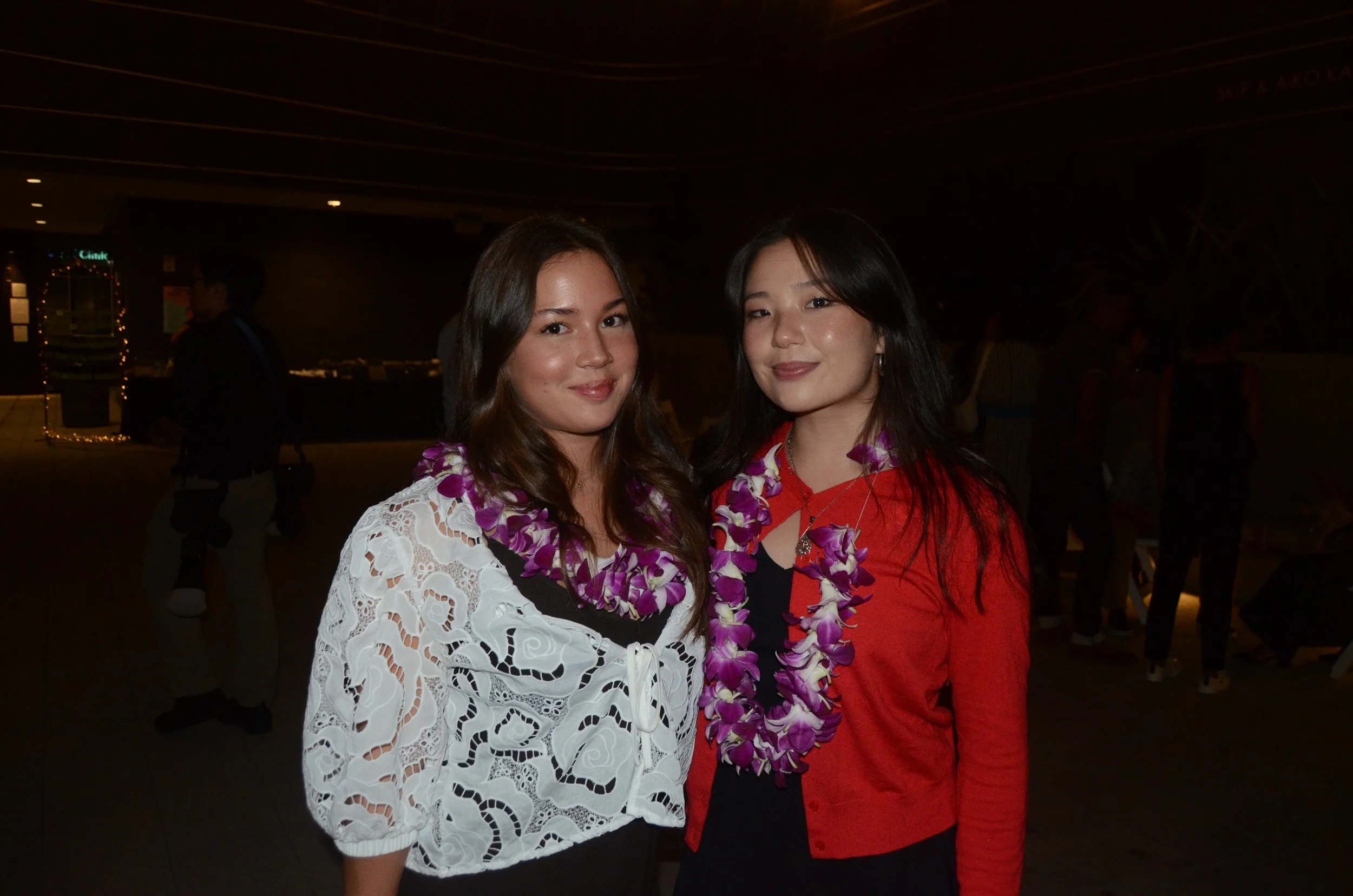
Blog 4: Together, We Together

By Kara Mak, 2026 CLA Intern

If I were to describe the experience that the CAUSE Leadership Academy has given me in one word, it would simply be inspiring. It’s inspiring to put into practice how we as individuals and as a team can work towards dismantling the barriers that keep the API community from being civically engaged. It’s inspiring to be part of a cohort determined and ready to leave their legacy on the world, whatever form that may take. It’s inspiring to see how API community leaders, like CAUSE ED Nancy Yap, Monterey Park Councilmembers Henry Lo and Thomas Wong, and UCLA Professor Dr. Natalie Masuoka, continue to show up for one another, time and time again. In our current sociopolitical landscape, where hope can sometimes feel so distant, this summer has bolstered my faith in the possibility of systematic change and reinforced my belief that our community— historically excluded from these important discussions— can be the ones to bring about that change.

Each member of my cohort challenged me to think, care, and act with compassion for community at a level that I haven’t really seen modeled elsewhere. However, each member also brought something totally necessary, and completely refreshing, to our group dynamic.

Ivory’s resilience and commitment to showing up never went unnoticed and was sincerely appreciated.

Gabe’s groundedness kept us on track to meet the goals we set for ourselves, each other, and what we wanted to achieve this summer.

Alan’s nonconformity brought creativity and open-mindness to our discussions and projects.

Jada’s careful observance ensured that our approaches considered a variety of outcomes.

AJ’s aura (and attitude) brought light, laughter, and positivity to every meeting and event.

Jayden’s adaptability and perseverance made working together feel so easy, supportive, and empowering.

Kaitlan’s unmatched ambition pushed me to strive to be the best version of myself for myself, my team, and my community.

Sophia’s unwavering authenticity is what makes her such an outstanding, and unbelievably talented, speaker, friend, advocate, leader, and role model.

Natalie’s ability to make every person she interacts with feel seen, loved, and valued is what carried me through the long and tiring days.

Kayla’s intelligence, especially her ability to challenge ideas with nuanced consideration, motivated me to ask questions with greater intentionality and curiosity.

Matthew’s deep thoughtfulness literally changed the course of our summer; without him and his dedication, our experience wouldn’t have been half of what it was.

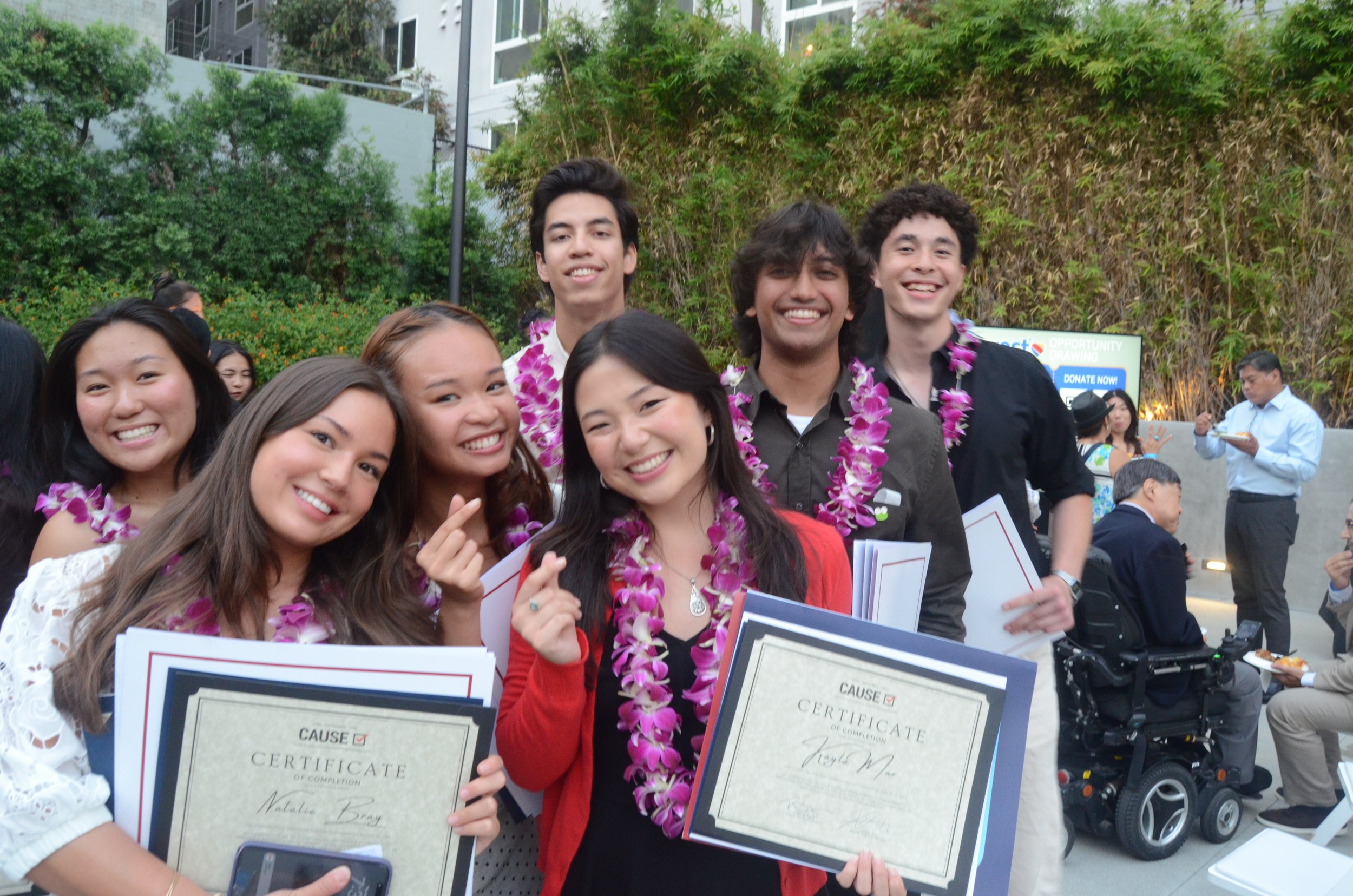
I am endlessly grateful to CAUSE for the opportunity to learn from and grow alongside such a remarkable group of young leaders this summer. I can’t wait to see how every individual in my cohort will end up inspiring the world around them, the same way they have and continue to inspire me. Because together, we together, forever!
Blog 4: A Politics of Heart

By Alan Alexander, 2026 CLA Intern

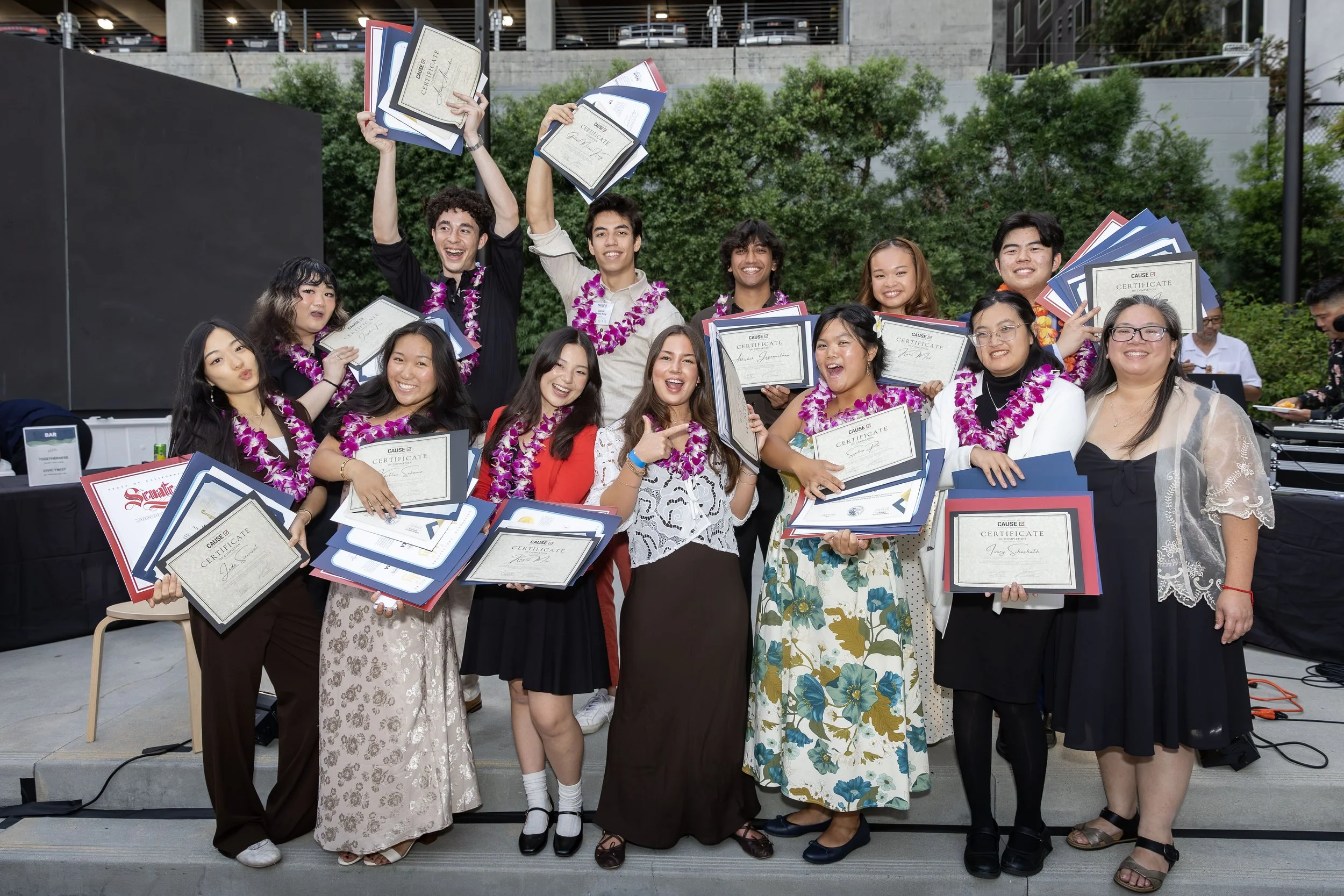
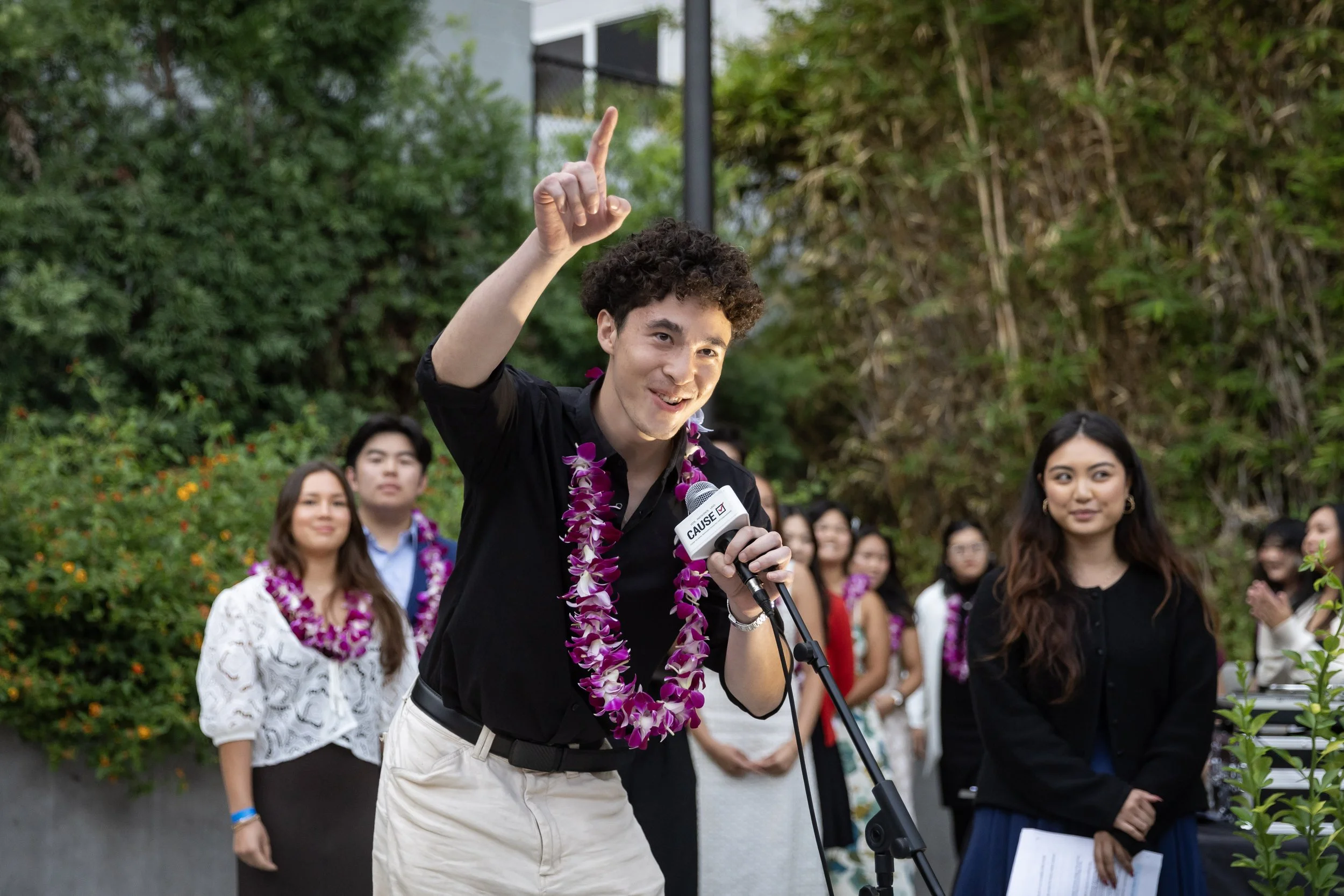
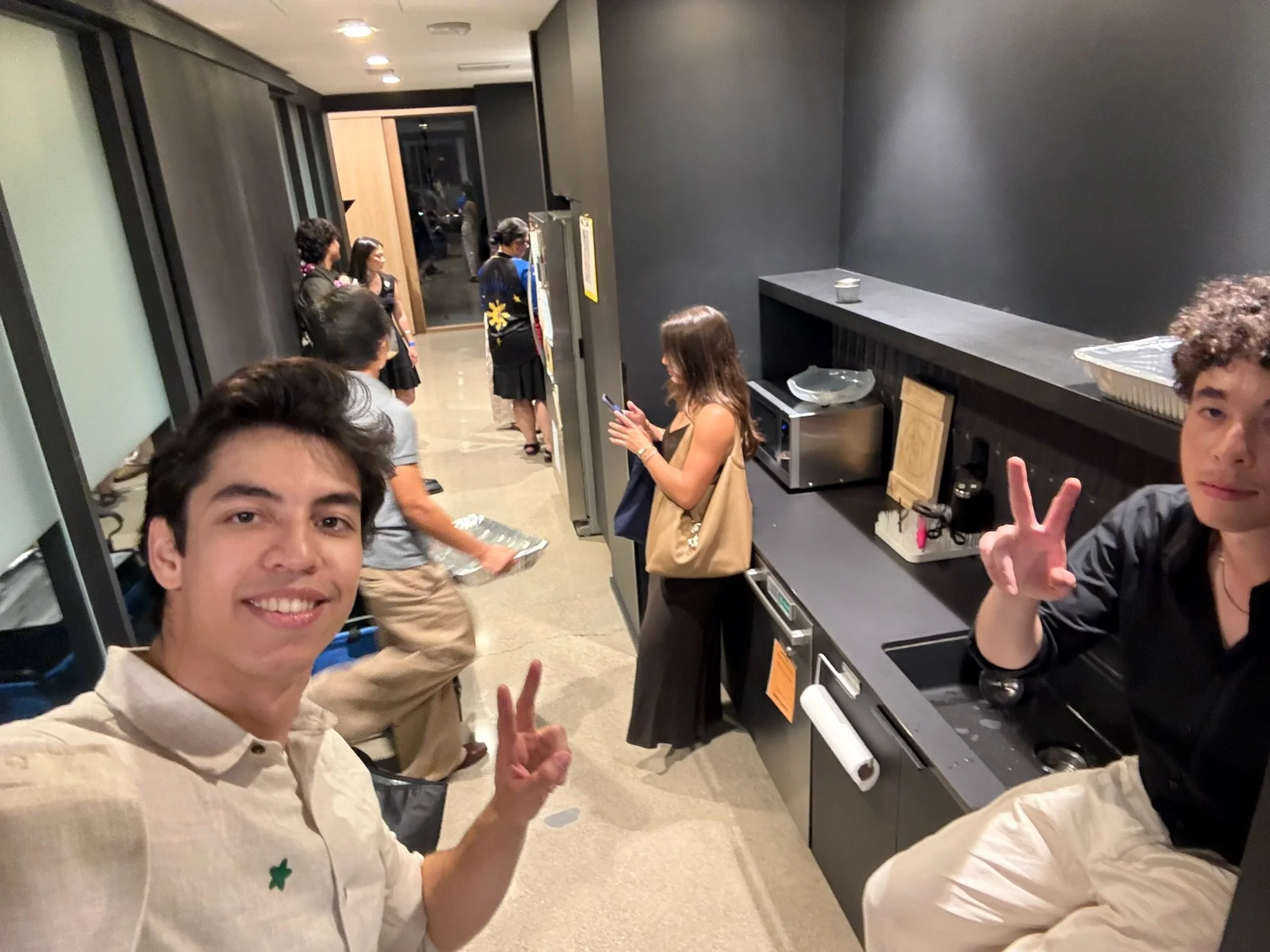
The midnight DTLA skyline sparkled as we were all gathered in the cozy hallway of CAUSE’s 8th floor office after a day of toil, sweat, bonding, and community at the 2026 Summer Soiree. It would be one of the last days we would all officially be together as part of the program.

As I walked past the meeting room I first stepped into all those months ago at the start of the program, I could not help but reflect on how profoundly my horizons were expanded on the true meaning of civics, government, and community.

When I first came into CLA, I must admit that I was grappling with a sense of inner emptiness. In all my fervid passions and explorations of government as a means of compassionately uplifting and inspiring others–of instilling hope in times of hopelessness–I was faced with the seemingly brutal reality that government was in actuality just a jumble of empty promises, never ending problems, and shallow statements aimed at appealing to the masses.

Where was the heart in the cacophony of politics? Where was the humanity?

After all my experiences these past few months, I’ve realized that this heart perhaps lies not in the public eye–not in the social media clips we see online or the speeches we hear on the news–but in the interactions behind the scenes. It lies in the care and love I and my teammates held for each other as we campaigned in the torturous 90 degree heat during our mock election. It lies in the wholesome and abjectly genuine conversation I had with an immigrant family while tabling at a festival for Senator Maria Elena Durazo. And it lies in the concerned small talk with Senator Durazo in the car ride back from a community event, knowing that the speech might’ve been delivered but action was still yet to be carried out.

In all these experiences, I’ve found the true meaning of community and the authenticity of all the people around me. From that meeting room filled with 11 other incredibly ambitious people, I’ve found 11 new friends. Through my times with CAUSE doing everything from fundraising to cutting lemons at 10pm, I’ve found a family.

So yes, civic engagement does mean voting and participation in government, but it also is inextricably linked with the amazing people you do it with. Neomu love.

Blog 4: be-CAUSE

By Gabriel Molina-Kong, 2026 CLA Intern

There is a door to everything that has ever had an impact on your life. Some doors you always keep open, like the door to your best friend or even your favorite restaurant. But more often than not we close hundreds of doors without even realizing it, and we never open them again. When’s the last time you reached out to your freshman year roommate or your high school teacher that wrote your letter of recommendation for college? 

Recently, I feel as though I’ve done far more door closing than opening. Call it growth (optimistic), laziness (pessimistic), or an inevitability of how many people I’ve met and my finite amount of time and energy to open the doors to them all (realistic): it’s just how it is for many of the people and places that once gave me community. As somber as it seems, I think it reveals the doors that matter the most to you: the ones that you constantly walk through, never forget the key, and fight to keep open. 

CAUSE has become one of those doors for me. Despite the fact that I topped a V6, the CLA program was still the highlight of my summer. The experience working in a Senator’s office and the professional development from the program was perfectly integrated with a sense of community and support from everyone involved. It was my fellow interns that made each day feel like collaborating with a group of friends instead of a cohort of coworkers; it was the wisdom and mentorship from the women who ran our program: Rachel, Andrea, and Nancy; and it was the wonderfully supportive network of AAPI leaders and advocates, from the Board of Directors to the electeds in Sacramento, that made CAUSE feel like a family. And if Vin Diesel has taught me anything, it’s that you never close the door on family. 

There is a world in which I didn’t do the CLA program, and I pity that version of me as he has one less door that he wants to keep open for the rest of his life. Thank you to everyone that made this program possible, and a special thank you to our sponsors!
Blog 4: A Summer of Past, Present, and Future

By Kaitlan Sakuma, 2026 CLA Intern

If there is one word to describe how I am feeling post-CLA, it would be: reflective. Reflective of the past, present, and future.

My path to CLA started in 2023, volunteering at CAUSE soirée through Key Club and long before I truly understood what CAUSE actually did. It was Robinson, a CAUSE alum and fellow Pitzer student who first told me I should apply. He had gone through the program a few years earlier and something about hearing it from a familiar face on my own campus made it feel possible instead of abstract. Around the same time, I took a class at Harvey Mudd on Asian American community studies, focused specifically on the San Gabriel Valley – my hometown. I’d grown up in Monterey Park, where being surrounded by people who shared pieces of my culture and carried similar immigrant stories was the norm, so normal that it never registered as something rare. I didn’t realize how much that has shaped me until I left it. Coming to Pitzer was the first time I experienced something different and that shift is what pushed me to actually put language to what I’d grown up around. It wasn’t until I was sitting in a classroom examining my own home that I understood how much API representation, work, and identity matters to me and outside of the SGV bubble.

That support network showed itself most clearly in a parking lot outside of the CAUSE office. I’d just found out I was being appointed to the California Student Aid Commission after a CAUSE work day but I felt too anxious to bring it up to my cohort. I was standing there with Matthew and Jayden when Sophia’s text landed in our group chat: “KAITLAN what is this I hear from my dad that you were just appointed by Gov. Newsom to serve on the CA Student Aid Commission????” Within minutes, the messages were pouring in. I hadn’t said a word, and I already felt completely supported and loved. That’s the thing about CAUSE I didn’t expect going in: They don’t just place you in an office or put you straight to work on the mock election. They build a room full of people who show up for each other without being asked. I didn’t earn that reaction by announcing it. I got it because CAUSE had already built the kind of cohort where people notice, and care, before you even say anything.

In my host office, with Assemblymember Mike Fong, I was able to attend many local events in AD 49 which was a transformative experience. One event in particular that shaped how I approach politics would be when I joined a tour of a nursing home in the district. This facility took care of about five patients in critical conditions. Walking through, I watched staff stretch every resource they had to give those patients real, attentive care. Funding came up, not as a complaint but as the honest reality of doing this kind of work. It wasn’t unique to this facility but rather, it is a gap nearly every sector continues to navigate in some form. That tour is when “everything is political” stopped being an abstract phrase for me, and it became something I could genuinely see in a room. It wasn't about anyone doing something wrong, it was about how far resources have to stretch, and how many real people are on the other end of every budget line. Being placed in Assemblymember Fong’s office meant I wasn’t just learning about the San Gabriel Valley from a desk – I was standing in the room where policy and daily life meet, and understanding just how much work it takes to close that gap.

This summer was filled with lessons, experiences, and people. We met AANHPI leaders across sectors, from people in policy, nonprofits, government offices, all on completely different paths but working towards the same thing: making sure our communities have real representation and a real seat at the table. My CLA experience didn’t just show me that AANHPI representation matters in the abstract. It showed me people actually doing that work, and I aspire to be part of making this history and paving the path for future generations.

So as I wrap up this last blog and reflect, I want to thank Nancy, Andrea, Rachel, and Heather. Thank you for the work you do behind the scenes to make this program what it is. None of what I experienced this summer happens without the care the CAUSE team puts into building it. To the CAUSE donors, sponsors, guest speakers, and the wider CAUSE community, thank you for investing in a program that invests in us. And to my cohort, neomu love :) Thank you for being the kind of people who show up, who celebrate each other, and who make a parking lot in Little Tokyo feel like home. I am so grateful to be part of this amazing CAUSE family and I cannot wait to see us grow and make history.

Blog 4: See You Later

By Kayla Mar, 2026 CLA Intern

My CLA experience can be summed up in one word: restorative.

Eleven people restored my faith in community. After nine short weeks, our time comes to a close. It feels abrupt. I look around at my eleven new friends. It’s funny to call them new, because it feels like I’ve known them for a lifetime. I am continuously amazed by everybody’s drive, passion, intellect, and talent. It’s hard to articulate just how regenerative these eleven people have been for me, what I imagine for myself, and what I believe in. Coming into CLA, I was apprehensive about the kind of people who would be attracted to this program: individualistic, cutthroat, competitive to a fault. This cohort quickly quelled my fears. I was met with the eleven kindest, most community-minded people I could have possibly met. In a time where individualism is killing community, I found myself among folks who commit to community everyday. 

LA County restored my belief in government. I did not realize how disillusioned I was with government until I stepped right back in. It’s cool to swing around an official government badge and have tap access to exclusive doors, but the magic of working for institutions of immense power that have minimally improved – and more often decreased – the majority’s quality of life was worn down long ago. It appeared I closed off the option of government as a legitimate means of making substantial change – as if many people on the “inside” of institutions are not also there to make government work for their communities. With all of its flaws, LA County ironically restored my belief in government – or more the belief that here, I can make substantial change. With all of its flaws, LA County continues to deliver a staggering array of services to a massive constituency. With all of its flaws, LA County can pass progressive policies that other levels of government couldn’t dream of feasibly passing. LA County inspires me to believe in a government that I want to see: one that serves its constituents, one that holistically addresses issues, one that listens and acts accordingly. 

The future restored my motivation. People and institutions altogether, I am excited for what awaits for all of us in the future. Our political climate has a way of demoralizing, demotivating, devaluing decades of social justice work. Yet every CLA session, I walked into the office with genuine joy to talk about politics and progressive horizons with my fellow cohort mates. I know that each and every one of the people I have had the privilege of becoming friends with these past nine weeks will go on to do such remarkable things and be the vanguard of changemaking. Rather than looking ahead at the future with dread and fear, I now look forward with reinvigorated motivation and excited anticipation. And I know the folks I met along the way will be right beside me. 

Goodbyes are hard, but I know for the 2026 CLA cohort, it’s just a see you later.

Blog 4: f/8 and Be There

By Jayden Tran, 2026 CLA Intern

f/8 and be there. The idea is simple – you don’t need the perfect settings, the perfect composition, or even the perfect photograph. You just need to be there when the moment happens. As someone who’s spent years behind the camera capturing moments of authenticity, it’s a philosophy I’ve always aligned with. But after spending this summer with CAUSE, I think I finally understand what it truly means.

In my first few weeks at CAUSE, I viewed politics similarly to a camera. I intended to understand the frame: where I fit, what subjects I should focus on, and how I could make myself useful. However, the summer kept throwing me into situations where there wasn’t time to adjust the settings or dwell on details. I spoke to constituents, coordinated policy, and pitched ideas, figuring things out as I went. I lived in the moment, rather than being focused on capturing it.

I was there when Assemblymember Mark González’s office distributed over 1,500 air purifiers to the same constituents whose details I’d collected and organized after speaking to them on the phone. I was there when the Summer Soirée set-up required us to make last minute adjustments to our layout and I adjusted our bar’s installation. I was there when Matthew’s car broke down in the parking lot. And I was there when I decided to represent my group in the Mock Campaign, putting myself in front of the voters rather than simply observing politics from behind the scenes.

Reflecting on my time at CAUSE, I realize I spent a lot of the summer worrying about whether I was doing things the “right” way.” Was I asking the right questions? Saying the right thing? Taking away the right lessons? Even my campaign became an exercise to get everything right, from the politics I advocated for to the way I looked.

But, I recognize now that politics rarely gives you the luxury of perfect conditions. Constituents can’t wait for the perfect policy memo before they need help; organizations can’t wait for the perfect moment before they act; voters can’t wait for a perfectly rehearsed speech before they vote. You cannot demand perfection from the environment of politics; you can only do the best you can in the moment.

Some of the moments I’ll remember most from this summer are the ones I never could’ve planned, like learning how to play mahjong at a senior center during a game against Andrea and Rachel, last minute joining the cohort’s Big Bear trip despite plans to attend Hard Summer, or exploring Sacramento after hours. These probably wouldn’t make it into the highlight reel of my political experience with CAUSE or the final cut of what I took away from my experience. But these were moments I learned to be fully present amongst my peers, my team, and with the communities I hope to serve.

That’s what “f/8 and be there” means to me now. It doesn’t mean preparation doesn’t matter or that we shouldn’t strive to do political work well because people can’t wait. It does mean that, at some point, you have to stop worrying about whether you’ve found the perfect shot and just take the damn picture.

I’m grateful to CAUSE in its entirety for giving me the opportunity to do exactly that. I want to thank CAUSE staff for letting me photograph our events and meetings. I want to thank the CAUSE network for challenging me to think through unique, engaging frameworks. But most importantly, I want to thank my cohort for being there: to laugh at my bad jokes, to steal my one- liners, and to support me – no matter what.

I entered this summer with the intention to learn how politics works. I leave knowing that politics is less about finding the perfect frame, and more about showing up when people, communities, or systems need you. I don’t know what the next photo I take will look like; I don’t know what political rooms I’ll enter; I don’t know what campaigns I’ll join or what mistakes I might make along the way. But I know I’ll be there.

And in my opinion, that’s more than enough.

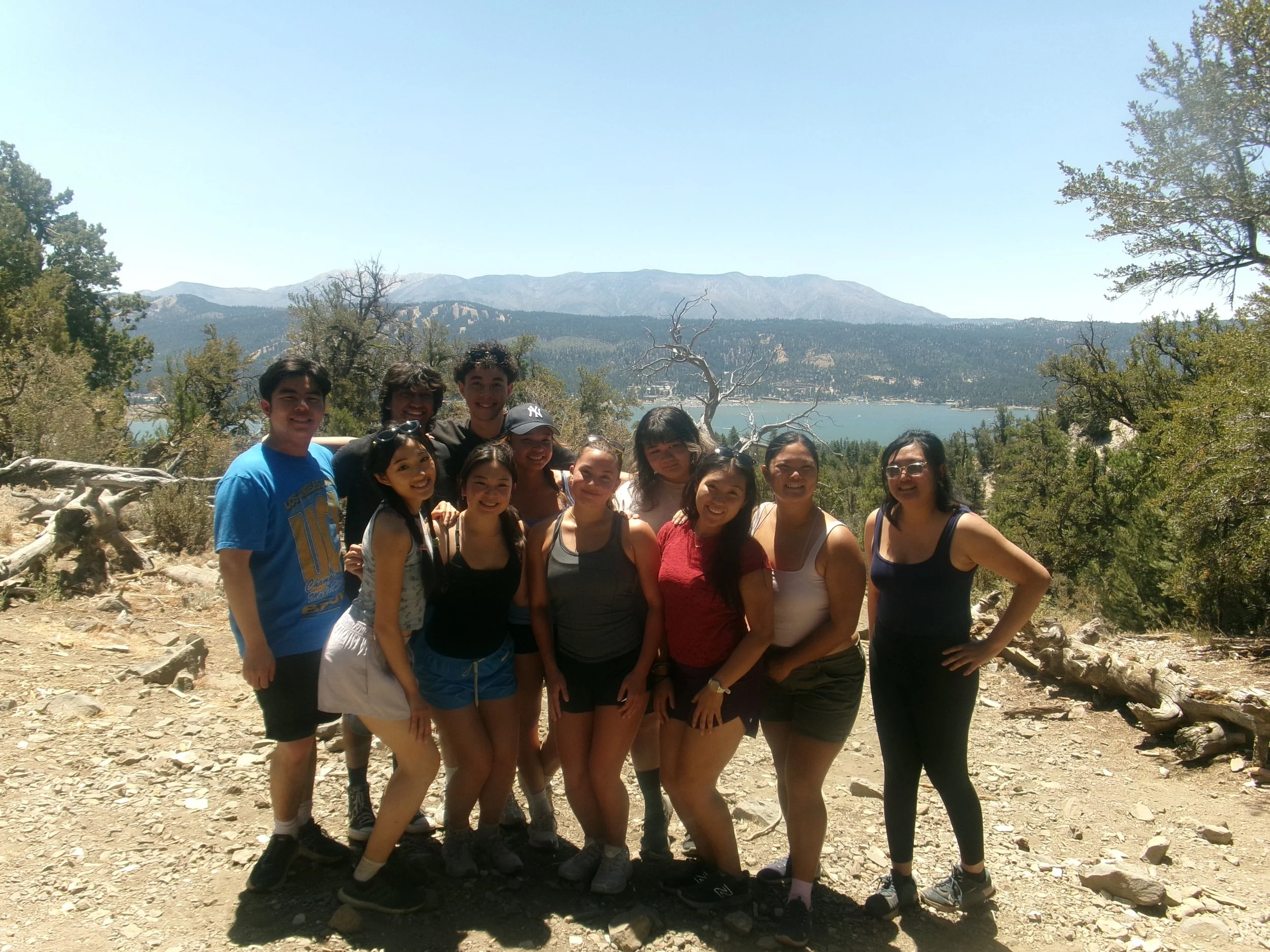
Calm before the storm in Big Bear…

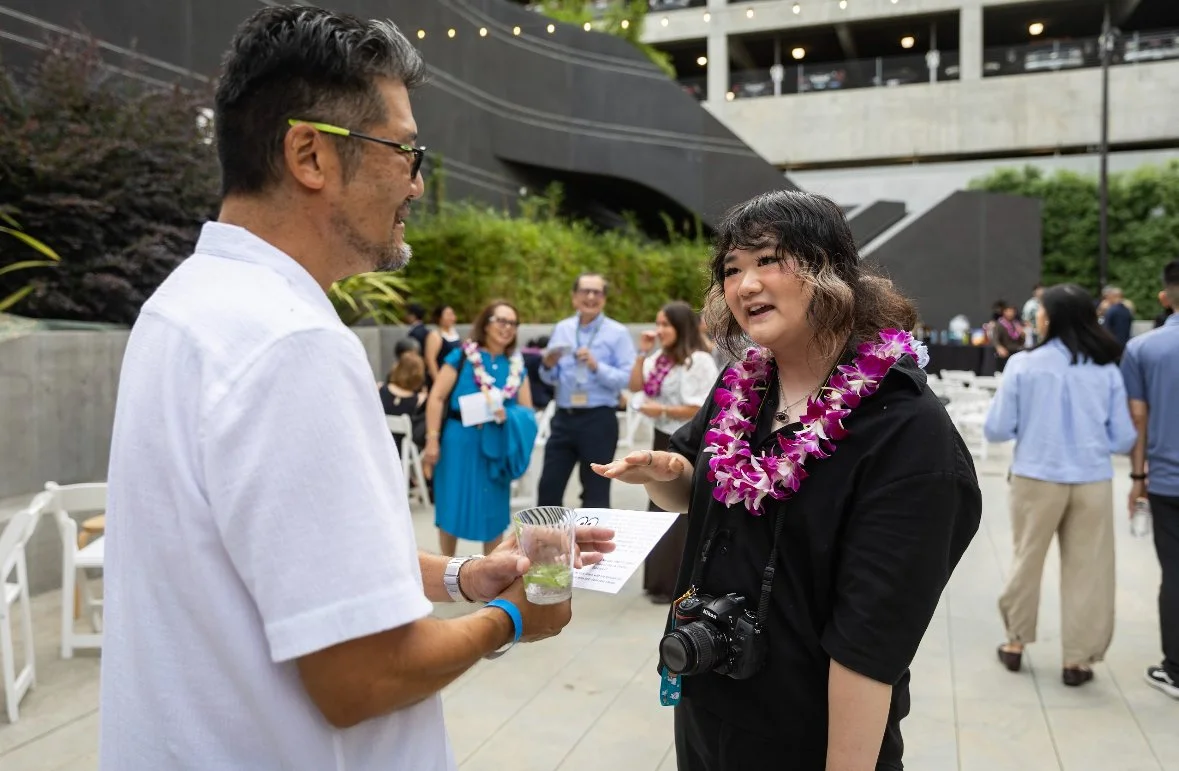
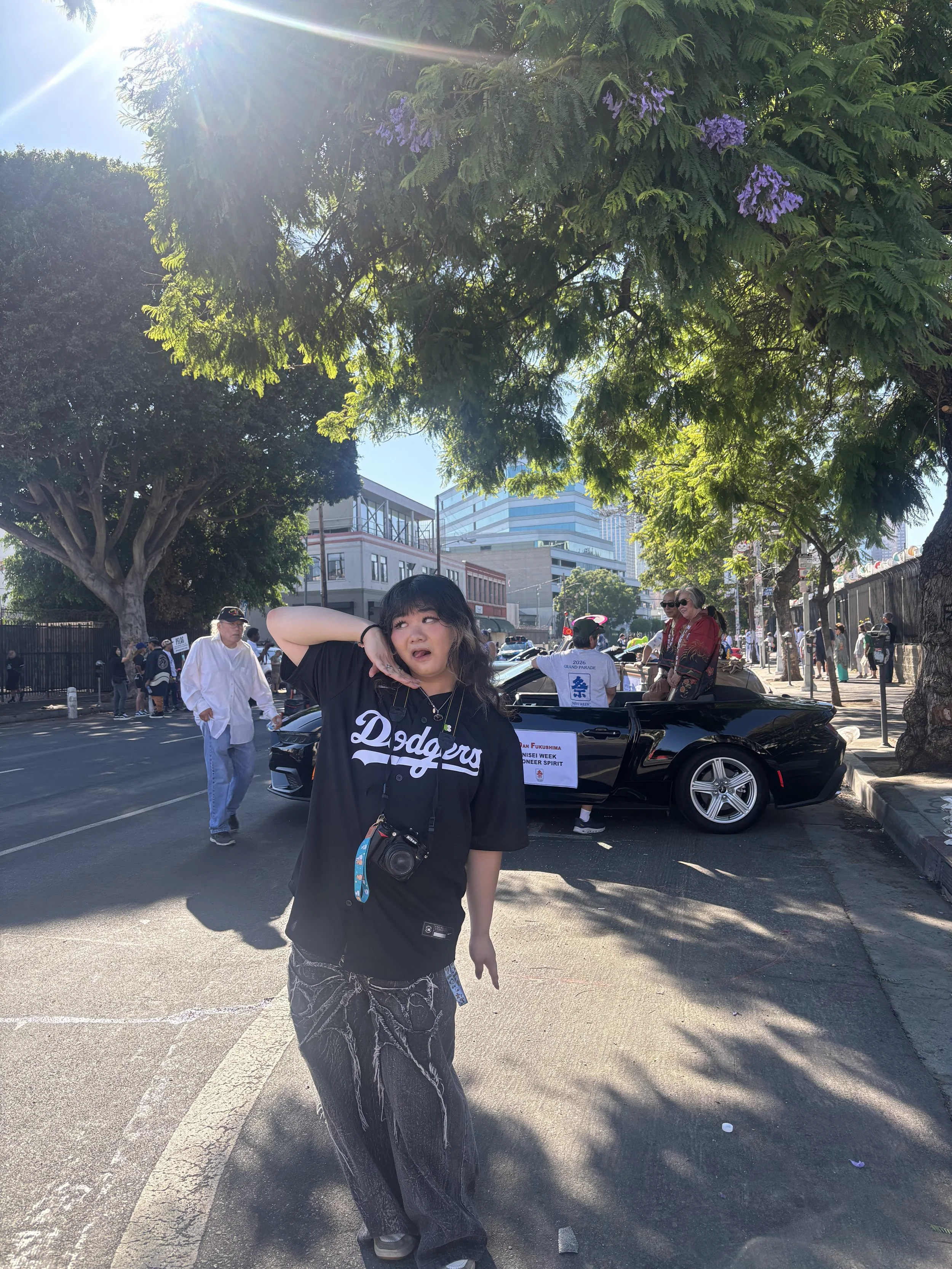
Photographing at the 84th Annual Nisei Week Festival with the Assemblymember’s

team!

Blog 4: 9 Weeks, 12 Strangers, and a Forever Journey

By Jada Sirivisut, 2026 CLA Intern

Some experiences leave an impact long after they end, and CAUSE will eternally be one of them. Looking back, what began as an exciting summer internship opportunity quickly grew into nine weeks that completely transformed how I see myself, my community, and my future. From unifying group work and guest speakers to my host office placement and the eleven people who became my closest friends, CAUSE gave me more than I ever expected. I am grateful for the CAUSE staff and team, who encouraged me to challenge myself, make difficult inquiries, and grow without being afraid to make mistakes. Their patience, guidance, and genuine investment in each of us made this experience feel personal, and I will always honor the ways they pushed me to recognize my own potential.

I entered CAUSE with the hope of growing as an API leader and advocate as much as possible, but quickly realized that growth would mean more than simply gaining professional experience. I now realize just how much there is to learn about myself, my voice, and the kind of leadership I hope to emulate. I learned to find my voice in spaces where I felt underrepresented, engaged in discussions on identity and representation, and explored campaign complexities. More importantly, I learned that meaningful change does not happen alone. It takes people who are willing to listen, stand beside one another, and work toward something greater than themselves. The lessons CAUSE taught me about advocacy, leadership, and community will continue to shape my approach to every space I enter moving forward.

My placement in the Attorney General’s Office of External Affairs at the California Department of Justice put these lessons into practice. I saw firsthand how community engagement and state policy intersect, realizing that true leadership is rooted in practicing empathy, building authentic trust, and centering the needs of the community. This invaluable experience will stay with me as I continue navigating the different eras of my life, whether that is in public service, law, politics, government, or beyond. I know that the person I become will be shaped by the people who have invested in me and the opportunities I have gained from them, and CAUSE has given me an incredible foundation to carry that ideal forward.

Something I did not expect was just how meaningful my cohort would become. Between small moments like inside jokes and encouraging through difficult moments to big moments like recognition by the Board of Supervisors and executing Soiree, the twelve of us who began as complete strangers became some of the most inspiring friends I have had the honor of working with. Each unique story and perspective assures me of how incredibly lucky I am that our paths happened to cross. I came into CAUSE expecting to build professional connections, but left with friendships that I genuinely hope will last far beyond this program. 

As I begin the next chapter ahead, I move forward with a fuller sense of who I am and hope to become. In moments of uncertainty, I hope to remember what CAUSE taught me: to lead with empathy, find my voice, and never underestimate the power of community. To the CAUSE staff, my host office supervisor, and my eleven incredible cohort members, thank you for making these nine weeks so meaningful. Beyond the program, I will carry all the people, lessons, and memories into every future era of my life.

Blog 4: Together We Shape Tomorrow

By Sophia Pu, 2026 CLA Intern

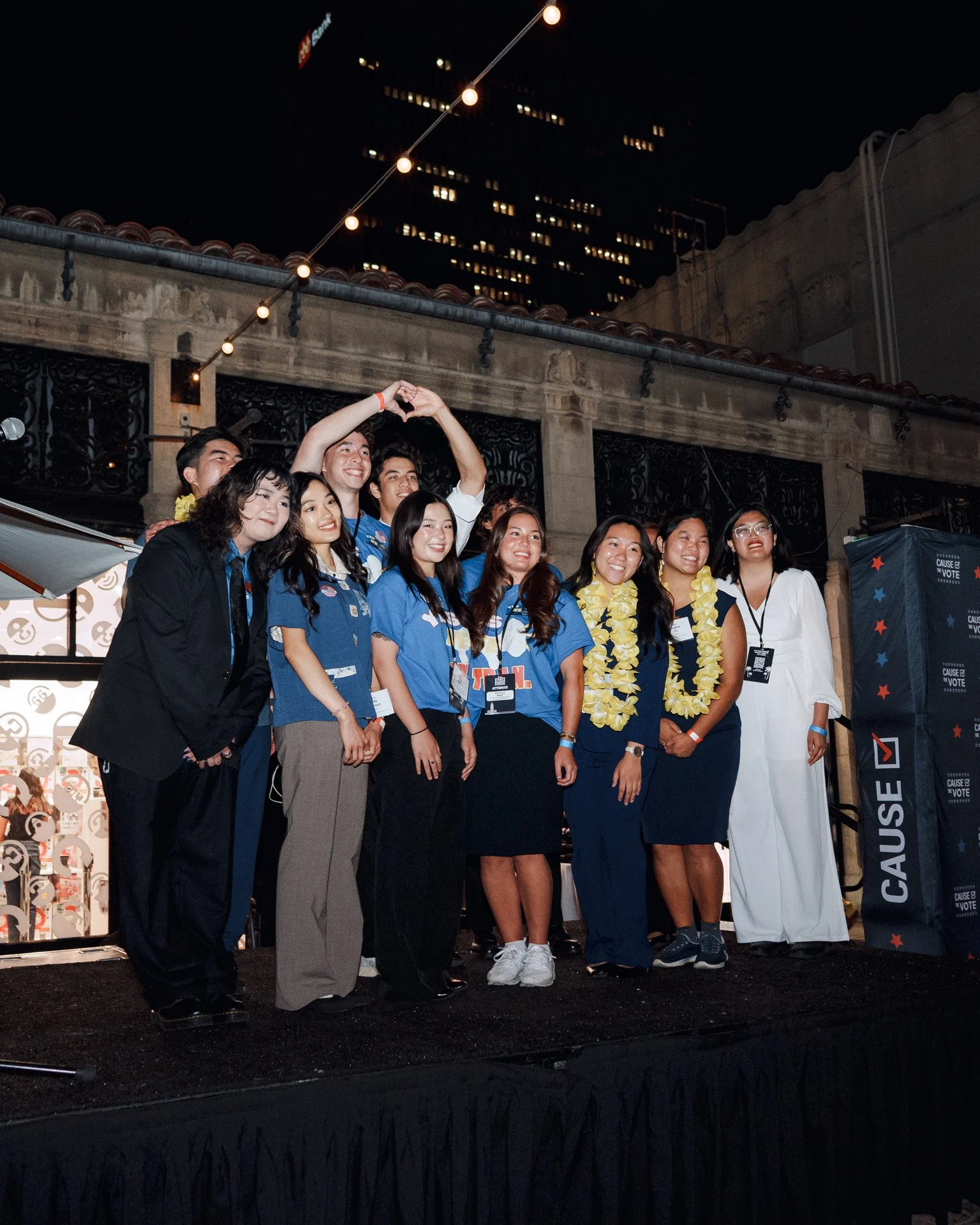
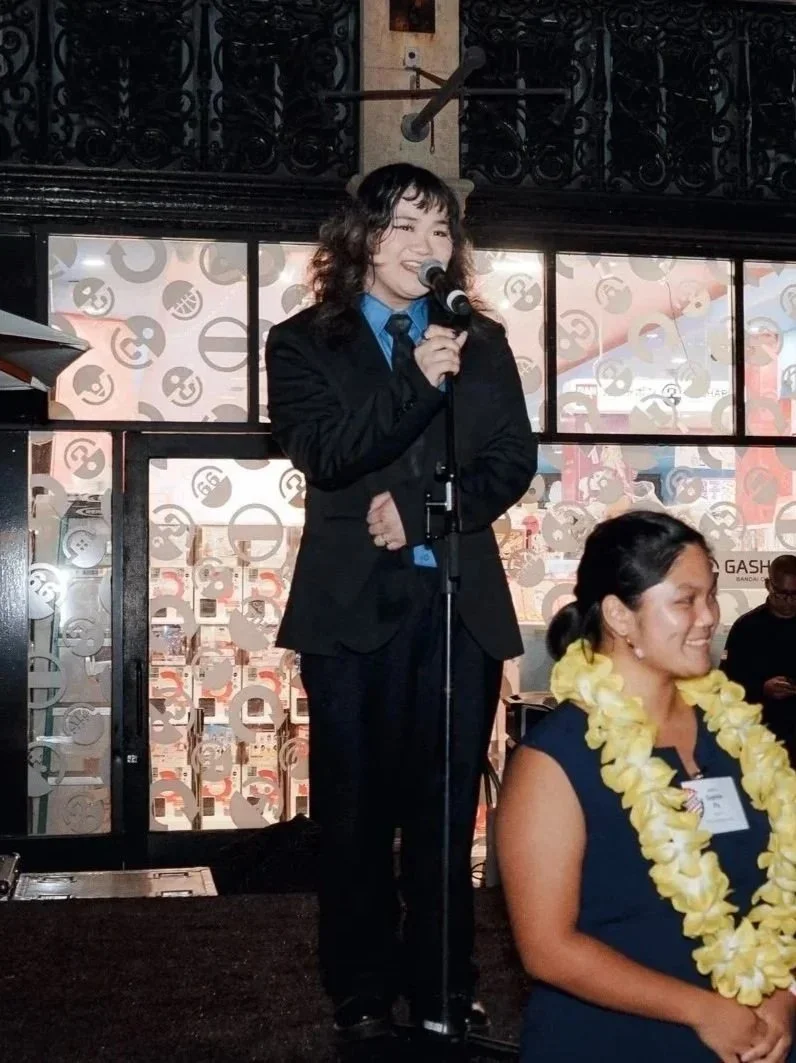
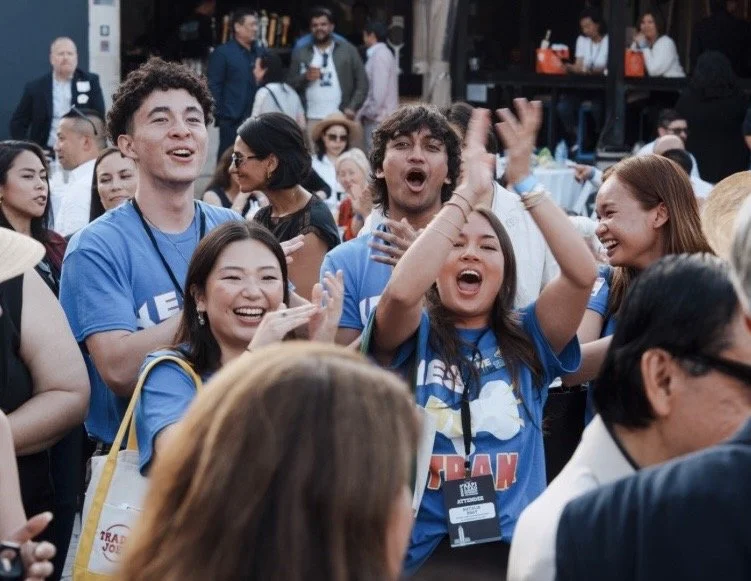
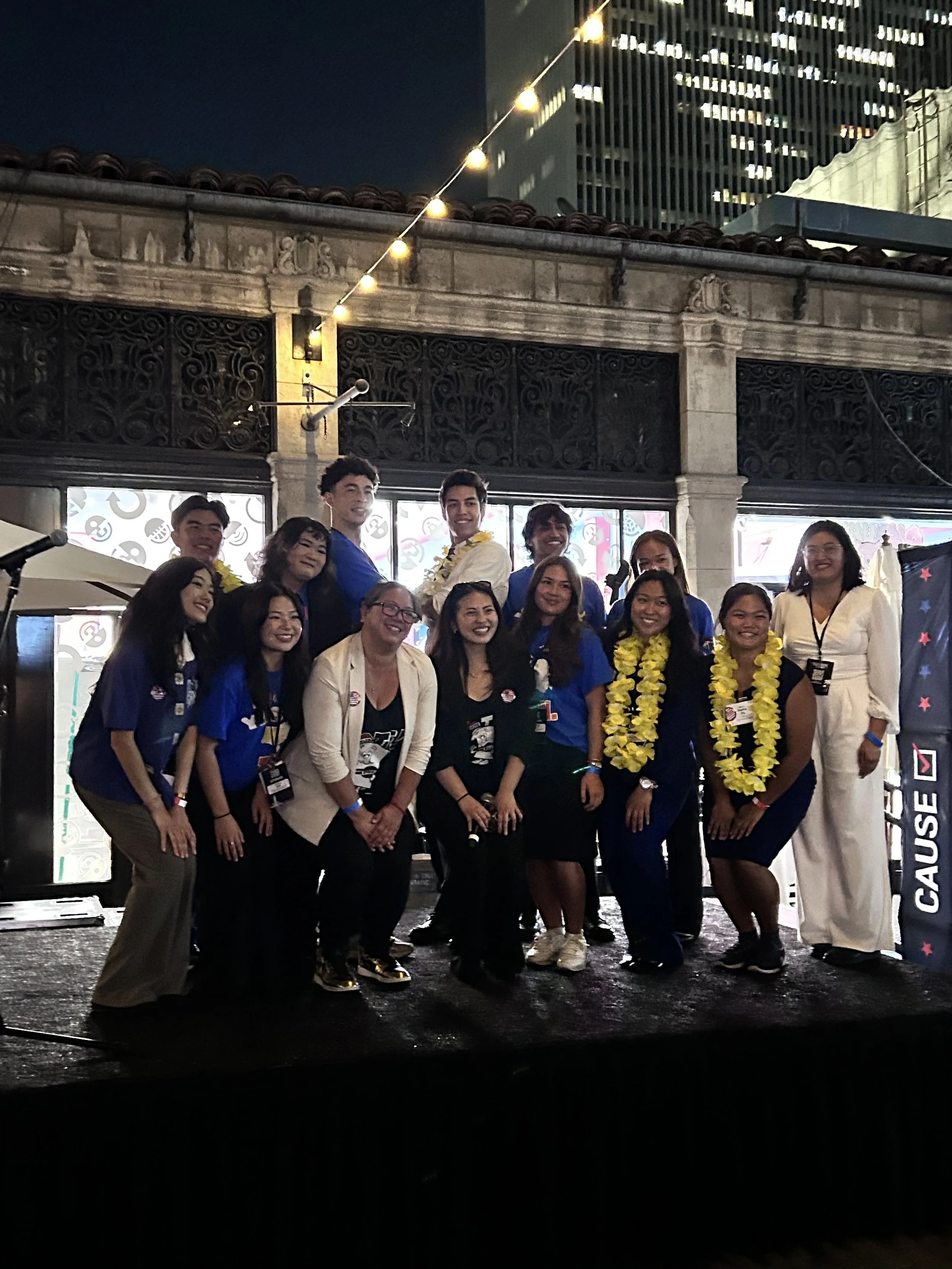
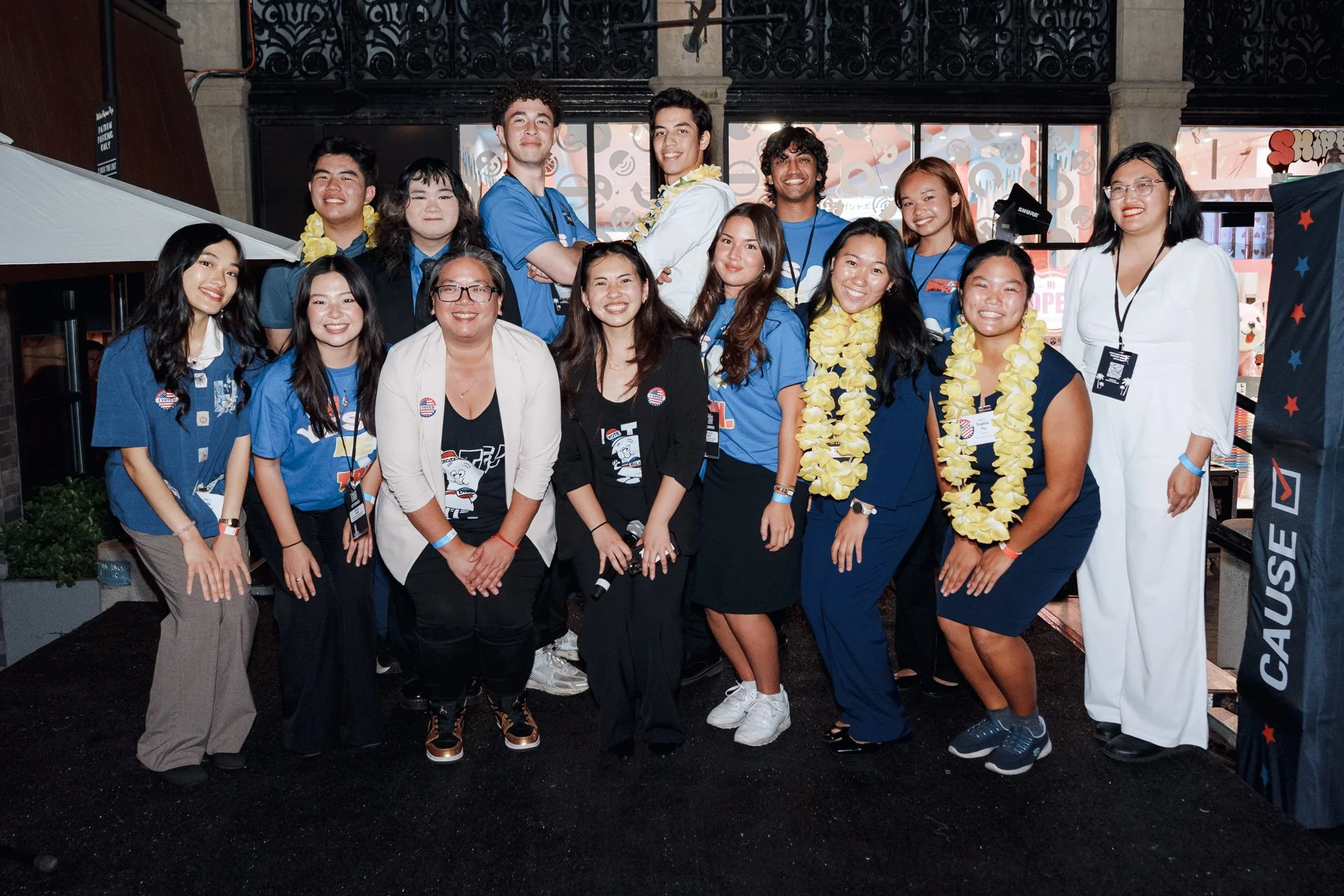
The party was in full swing when I finally paused to appreciate the 2026 CAUSE Summer Soiree. Terasaki Budokan’s courtyard was alive with conversation as old friends reunited, colleagues reconnected, and young leaders met those who paved the way before them. As I watched people hug and laugh, I imagined the day my cohort would do the same – get together each year at a CAUSE event, catch up on our careers, and reminisce about CLA 2026.

We would talk about rallying to see the capitol at night in Sacramento after a long day of meeting legislators and the staff who make their work possible. Someone would pull up the photos of Gabe attempting (failing) to make AJ fly and finally succeeding with Jada. We’d stumble across the selfies of us in the balcony above the Assembly floor, feeling like one day we might be sitting in the wooden chairs below us. And maybe one of us would be an assemblymember or state senator by then, welcoming the latest CLA cohort to the state capitol.

We’d discuss how inspiring it was when our guest speakers’ journeys reflected our own battles and aspirations. Whether it was Ivory and Soukprida Phetmisy, Kara and Jason Song, or Jayden and Stacia Kato, their stories showed that we belong in every space. We’d realize how much of our careers and belief in ourselves we owed to those before us.

Then we’d laugh about Matthew’s car breaking down, the cherry on top to his hour-long commute to Little Tokyo. But also how Matthew, AJ, and Kayla made that commute everyday and still brought the energy to make everyone laugh and get work done. Looking back on this summer, we’d realize it proved that the price of community is inconvenience, but the reward is a lifetime of joy and togetherness.

We’d think back to the blood, sweat, and tears that shaped some of our most formative CLA memories – from the 12 hours of mock election, to the odyssey of trying to swim at Big Bear Lake. We’d appreciate how Jada’s serenity and Kaitlan and Natalie’s drive got us through the chaos. Those experiences pushed us to be a better team and showed us what we’re capable of when we’re challenged past our comfort zone.

We’d thank Jayden for taking all the photos of our cohort, from goofy candids to glowing portraits. Then we’d turn around to see Nancy, Andrea, and Rachel, who taught us what it means to have quiet confidence, and celebrate the next graduating class of CLA interns.

Blog 4: Conclusion of a Life Changing Program

By Ivory Sihashath, 2026 CLA Intern

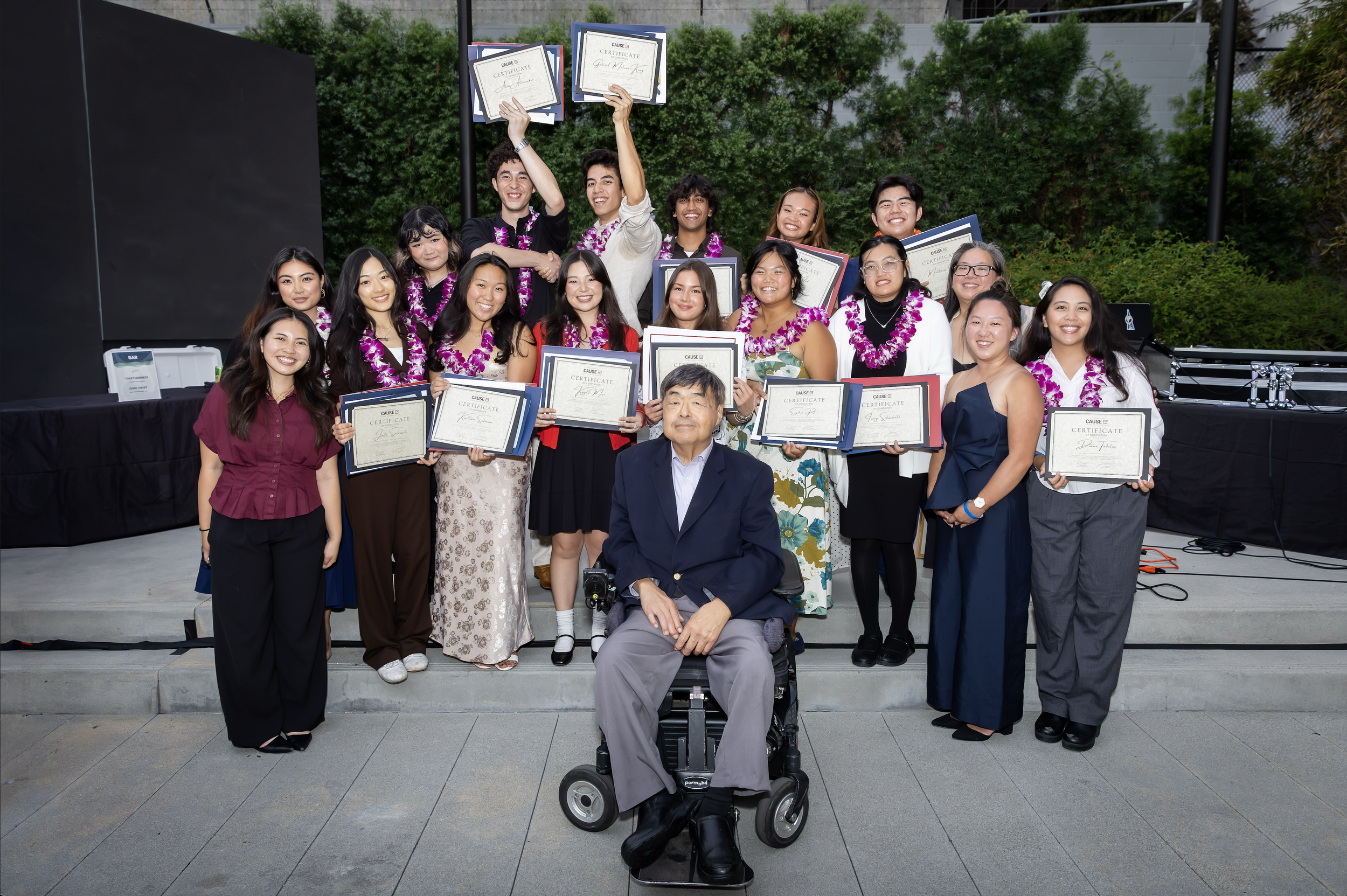
Our hard work and preparation for the entire summer ended beautifully with the CAUSE Soiree event. Our culmination of meeting all the public officials and community leaders through the summer was manifested into our event.

A Powerful moment leading up to Soiree and the final meetup was our guest speaker Soukprida who really resonated with me not just as a Lao Queer American woman, but also with her experiences. The experience of being “the first Lao” shook me politically. I always felt the pressure of being “the first” in everything. Yet what I realized what I really wanted to do, was make a difference in people's lives in government, to make them feel represented.

An important takeaway I had in the ending weeks was how much more time I wish I had with my cohort. But I am glad CAUSE is giving us the chance to still be connected professionally.

An interesting discussion we had were the resume and mock interview workshops. They really put me on the spot to prepare me for future interviews. This is significant as I had recently graduated college, and was looking for a job after the CLA program. The mock interview questions were challenging but also showed me that I had a lot more to offer. This was very compelling to me as I could come up with answers on the spot and I didn’t know I knew morethan I know. For the questions I did not know how to answer, it was great to work with our mentors and my peers in receiving feedback.

In the end, the CLA program really fits into the broader conversation of civic engagement as young adult leaders were being developed that could serve our greater communities and areas. We were able to develop this summer as young professionals who will shape the future of California or wherever we will go as not just leaders, but as AAPI professionals and community leaders.

Blog 4: Thank You

By Abhishek Jagannathan, 2026 CLA Intern

I wrote my application for CLA almost 9 months (one whole child!) ago. One of the essays on the application asked for me to describe what made me interested in CAUSE. I wrote about the mock campaign project, working in government, and connecting my previous experience with new skills in these areas. I did not really write anything about the significance of CAUSE’s work in the API community, and what it meant for an organization like that to exist. It’s ironic, because that focus on API identity has been the most meaningful part of my CLA experience.

I’m a first generation Indian American. I grew up in Simi Valley, California - a city where a significant proportion of the academically inclined youth (the social bubble I most clearly fell into) were also first generation Indian American. On paper, I was fortunate enough to be surrounded by people who had similar backgrounds, creating a strong community in a predominantly white city.

But that wasn’t exactly my experience. Compared to my peers, my upbringing was relatively unorthodox. Although my parents only immigrated to the US in their mid-20s, they were both raised speaking English as a first language, and so I grew up never speaking any other language at all. My family is not religious in any traditional way. We never actively listened to Indian music, and I failed to develop any connection to Indian cinema. Even politically, I observed how my family did not align with most other families who were theoretically similar to us. From a young age, I felt that my only genuine connection to my cultural heritage was through the food my mother would cook, but even that has diminished in the last couple of years after moving to college.

So, while I ostensibly was ‘in community’ with a remarkably similar demographic cohort on paper, I actually found it very isolating. This was exacerbated significantly by a kind of purity culture that I am ‘less Indian’ because I was not raised with the typical influences. I was left with a complicated relationship to my cultural heritage - one that was technically accessible but felt largely foreign. If I struggled with claiming my identity as an Indian American, I certainly did not identify with API identity as a whole. From the attitudes I observed of those around me, Indians did not self-identify as Asian. Our history in this country, our cultural practices, the stereotypes we face, and the discrimination we receive are distinct. At times, I felt confused as to why we were politically grouped into a category that seemed too broad to be meaningful.

I think while applying for CAUSE, I still carried that skepticism with me. In my interview with Andrea and Nancy, I spoke of representation only in terms of other Indian Americans. When I was accepted into the cohort, I was surprised, and felt a great deal of imposter syndrome, which persisted through my first week in the program.

This changed for me on the Friday of the first week, during an activity about cultural heritage. We were provided with a timeline of API history in the US, and instructed to have conversations in small groups about what stuck out to us, and about the histories of our families. The resulting conversation was the first time I was able to effectively articulate my internal feelings of cultural ostracization, which in the moment felt like a big milestone. This activity is also where I learned why Indian Americans are part of the API community - because community leaders in the 1970s advocated for us to be included in the Asian American demographic politically so that we would receive civil rights protections. This information really resonated with me, because it was directly relatable to my own experience. I had applied to CLA strategically, knowing that despite my internal confusion, I objectively fell into the category CAUSE was catering to, and could benefit from it. In the same way, Indian Americans advocated to be considered Asian American strategically, knowing it would yield a political benefit. This connection helped me root my cultural identity in something I intuitively understood, and could relate to my present day life.

At the start of every CLA session, Rachel leads us in a grounding exercise. We take a deep breath, and think of four things we can see, three things we can touch, two things we can hear, and one word to describe how we feel. The idea is that this exercise roots us in space and in the present moment, before we proceed with our agenda for the day. I think that this practice shines through in all of CAUSE’s work.

Before CAUSE, my cultural identity felt very removed from the space I inhabited. From my observations, India’s cultural center is its pride in its history, the power it once held on the world stage, and the respect that legacy demands. But for me, this past is one that I could not interact with, and therefore I remained disconnected.

At CAUSE, everything we do for the API community is grounded in the present day. Our voter education efforts, our community outreach, these are about this moment in time that we inhabit and how we can work to shape the future for the good of our community. It is relatable and immediate. At an event like our end of summer soirée, the culture is all around us, rooted in political engagement and civic service, carried by conversations about our cohort’s success and our immediate futures. Consequently, it is a culture with which I feel not only comfortable, but proud to claim as a defining component of my own identity. I am eternally grateful to CAUSE, to Nancy, Andrea, and Rachel, and to my fellow cohort members for creating this space and making me feel at home in this community.

Blog 4: You’re My Wonderwall

By Natalie Bray, 2026 CLA Intern

The squeaky wheel gets the grease. That phrase stuck with me throughout the duration of my experience at CAUSE this summer as I navigated a variety of new and different situations presented to me through the Leadership Academy. This became my motto for talking to electeds, asking my supervisors if there was more work I could do in a specific policy or research area I was interested in, and conversing with individuals about my passions for going into the legal field. All of these interactions I had throughout the summer because of this newfound philosophy of mine provided me with a deeper connection to the work I was doing, and allowed me to take initiative on things I would not have been able to have access to had I not spoken up about them. I knew that CAUSE was an integral part of this, providing me an invaluable resource in the connections I was able to make through their network. And, it was not lost on me that I would never have been able to gain the same knowledge and experiences CAUSE provided me with this summer without the organization’s assistance, support, and genuine care. As I end this summer feeling as empowered as ever to be that squeaky wheel, I can’t help but reflect on the girl I used to be. 

Growing up in a predominantly white area that viewed me as a societal anomaly just because I was mixed race made me overtly aware in my youth that I was not going to be comfortable in a lot of settings. I learned to navigate this, and didn’t fear speaking my mind even when I was extremely uncomfortable doing so. This led me to operate a lot of situations on my lonesome, never relying on anyone else to back me up or support my beliefs. This individualistic mentality also gave me an intense fear of failure, knowing that I would have to build myself back up, alone, after any mistake I made. This hyper-independency came from a sense of survival within my surroundings, but often left me more isolated than I would care to admit. Taking these lived experiences with me into the first day of CAUSE, I wondered if I would finally be able to feel comfortable in my surroundings, or if I would stay in my own, solitary bubble again throughout the summer. Who knew that this solo mentality would be dismantled by just one straw of a spaghetti noodle. 

On the first day of CAUSE, we were tasked to build spaghetti towers. Teaming up with my peers, we successfully made the worst spaghetti tower out of all of the other groups in the cohort. But what I took away from this wasn’t the failure of our building, but the laughs shared and communal ideas thrown out throughout the construction process. Those people in my spaghetti tower group grew to become some of my dearest friends, alongside the rest of the cohort. Right off the bat, I knew I had found community within my colleagues, and finally felt the sense of trust I had been missing in previous spaces within the walls of Centrl Office. I learned the importance of community and reliance, as I became more comfortable turning to others for help, and to give help. This allowed me to feel more empowered to turn to others in other realms as well, and become that squeaky wheel in building my network and collaborating with different audiences. CAUSE showed me community in ways I had never seen, and for that I am eternally grateful. As I continue on into new endeavors, I will always carry with me memories of this transformative summer, and a newfound acknowledgement of the benefits to alliances and coalition building. I cannot thank my cohort and CAUSE alike enough for how much this summer helped me grow as a person. I am excited to see what all of these inspiring young leaders continue to do, and of course how I can help along the way. 

Blog 4: Together we Together

By Matthew Inui, 2026 CLA Intern

Written into our Executive Director’s Instagram bio is the phrase “together we together”(specifically in all lowercase), and somehow, this short phrase became our cohort’s tagline. In almost any situation, someone would figure out a way to weave this phrase into what they were saying. It was even almost our Soirée theme (written deliberately in CAUSE orange).

However, I never really took a moment to think about what this phrase means. At face value, it has no meaning — “together” was never meant to, nor do I think it should, be a verb. Now, I make no claim to Andrea Mac’s genius when she cooked up this Instagram bio, but I’ve tried to consider what meaning could possibly be gleaned from these three words. And strangely enough, I think the verb-ization of “together” perfectly captures the understanding of community I’ve built over the past nine weeks: togetherness is not simply a condition we find ourselves in, but a conscious action we choose to take.

As proud GMK campaign manager and state commissioner Kaitlan Sakuma once said, “community isn’t something you’re handed — it’s something you show up for,” and throughout my summer, I’ve seen time and time again what it looks like to show up for each other. Maybe it was seeing each intern advocate for themselves in their host offices to be part of some truly incredible projects. Maybe it was my mock election team working beyond our assigned roles to support each other through what was undoubtedly one of the most difficult and exhausting projects of our short lives (+Gabe’s slightly longer life). Maybe it was the way my CAUSE team puts so much thought and care into ensuring that our communities are represented in spaces where we would never think representation is needed.

Over and over again, I saw the way the CAUSE family showed up for themselves, for each other, and for community. And somewhere along the way, “together” stopped feeling like an adverb and started feeling more like a verb. To “together” is to make the conscious choice to invest in one another—to advocate, support, listen, celebrate, and, most importantly, show up. I’ve learned so much over the course of my nine weeks with CLA, and if my daily evals are evidence of anything, it is that I have many a key takeaway from our programming. But if there’s one thing that I’m confident will last me my lifetime, is the community that we chose to invest in this summer, rooted in the belief that only together can we together.

Blog 3: Redirection & Reassurance: What I Learned From Canvassing

By Kara Mak, 2026 CLA Intern

Unlike many of my peers in the cohort, prior to Election Night, I had no experience with political campaigning or canvassing. My team rehearsed our pitches and prepared answers to what we thought were going to be frequently-asked questions, but I still felt nervous. I was, however, pleasantly surprised by the experience! While the interactions I had during canvassing were mixed, each taught me something new about how I presented my candidate, how I presented myself, or what people were looking for in a county executive.

Some interactions I had emphasized the need for redirection. When I approached one elected official asking if they had heard about my candidate yet or if they would like to learn more about them, she straightforwardly replied, “No.” Slightly shocked by her response, I tried to quickly thank her for her time and move on. But before I had the chance to leave, she said, “Do you want a little advice? It’s because [the other team] got to me first. You guys didn’t try to come up and talk to me.” This confused me. Here I was, trying to talk to her, but she simply didn’t want to hear it. When I brought this up to Nancy, she explained that may just be the voter strategy that certain elected officials were taught, and what they personally believed was best for securing votes. Although I was unsure how to approach it at first, this elected’s comment ended up informing my outreach approach for the rest of the night: talk to as many people as possible, as concisely as possible.

As I continued canvassing throughout the night, I felt my pitch getting clearer and more concise, all the while I felt myself getting more confident. I got into a flow, detailing my candidate’s lived and professional experiences, tying it into their policy platform, before passing out fortune cookies that would “predict” who the people I was speaking to were voting for— all in under two minutes. I felt people becoming more receptive to my pitch because of the energy and enthusiasm I was putting into it. A handful of elected officials told me I was doing a great job, and one even told me that the way I tied the candidate’s backstory into their policy approach really resonated with them. Those moments were incredibly reassuring, especially forsomeone like me, who went into canvassing today with a lot of nerves and no experience.

All in all, this experience demonstrated to me that canvassing is not about the perfect pitch or having the most experience with campaigns. Rather, being successful at canvassing all comes down to connecting with others. Connecting with as many voters as possible, as quickly as possible, so they can be empowered with the knowledge they need to cast an informed vote. Connecting with your candidate so you can meaningfully convey their reason for running to voters. Connecting with individual voters on a personal level, through being open to their questions, advice, and concerns. While I do not see myself working the campaign trail, I do know that the skills I learned while pitching and the self-confidence I gained through this experience will serve me well in the future as a mentor, community advocate, and leader.

I had a great conversation with Mayor Adena Ishii, the first Asian American and the first woman

of color to serve as Mayor of the City of Berkeley!

Blog 3: A Shakespearian Saturday

By Gabriel Molina-Kong, 2026 CLA Intern

Election night gave me a feeling that I hadn’t felt since my days playing Macduff in a high school production of Macbeth. It was the feeling of having weeks of preparation culminate in one night when you give everything you have for the audience, or in this case, the electorate. As a candidate, I had to memorize and give a speech, think about the life that candidate Molina-Kong had lived, and talk to people as if I were that man. It’s exactly the kind of character preparation that our director would have us do in my school’s theater program. And just like any high school play, some of the audience was receptive to our performance, and others just sat through it. 

At a certain point in the night, I was speaking with Vice Mayor Danny Hang and Councilmember Sabrina Bow, and I embodied my character so well they actually believed that I was the former city manager of Pasadena, had raised $1.8 million, and was really trying to take on the major players that intend to run for County Executive. They kept hitting me with questions that neither me nor my team had prepared in advance, and it was in that conversation (and many others like it) that I saw the positive impact that nine years of improv could have on a career in politics. My team and I had prepared ourselves for what we thought was every possible question and concern that could be raised in a room full of elected officials, but all that prep gets thrown out the window when someone asks you about a department you’re unfamiliar with or a policy you didn’t know existed. It’s like what General Eisenhower once said: Plans are worthless, but planning is essential. 

One thing the mock campaign did was give me a reason to talk to everyone in the room and introduce myself. In leading with the campaign, many people were intrigued and then turned their focus onto me because they were interested in knowing the kind of person that would participate in something like that. It made networking feel less stilted and more a natural byproduct of a task that we needed to execute for our campaign. It was an incredibly fun night, but I suppose that’s easy to say when you win.

Blog 3: A microcosm of our moment

By Kayla Mar, 2026 CLA Intern

After a whirlwind of an evening, would you mosh in front of your elected officials? Apparently for CLA’s 2026 cohort, the answer is an astounding yes. As the votes were tallied and results announced, the nerves and exhaustion melted off our bodies into a celebratory euphoria. But this feeling could only exist after an arduous 10 hours of campaigning to an audience not always receptive to being sold on a mock election.

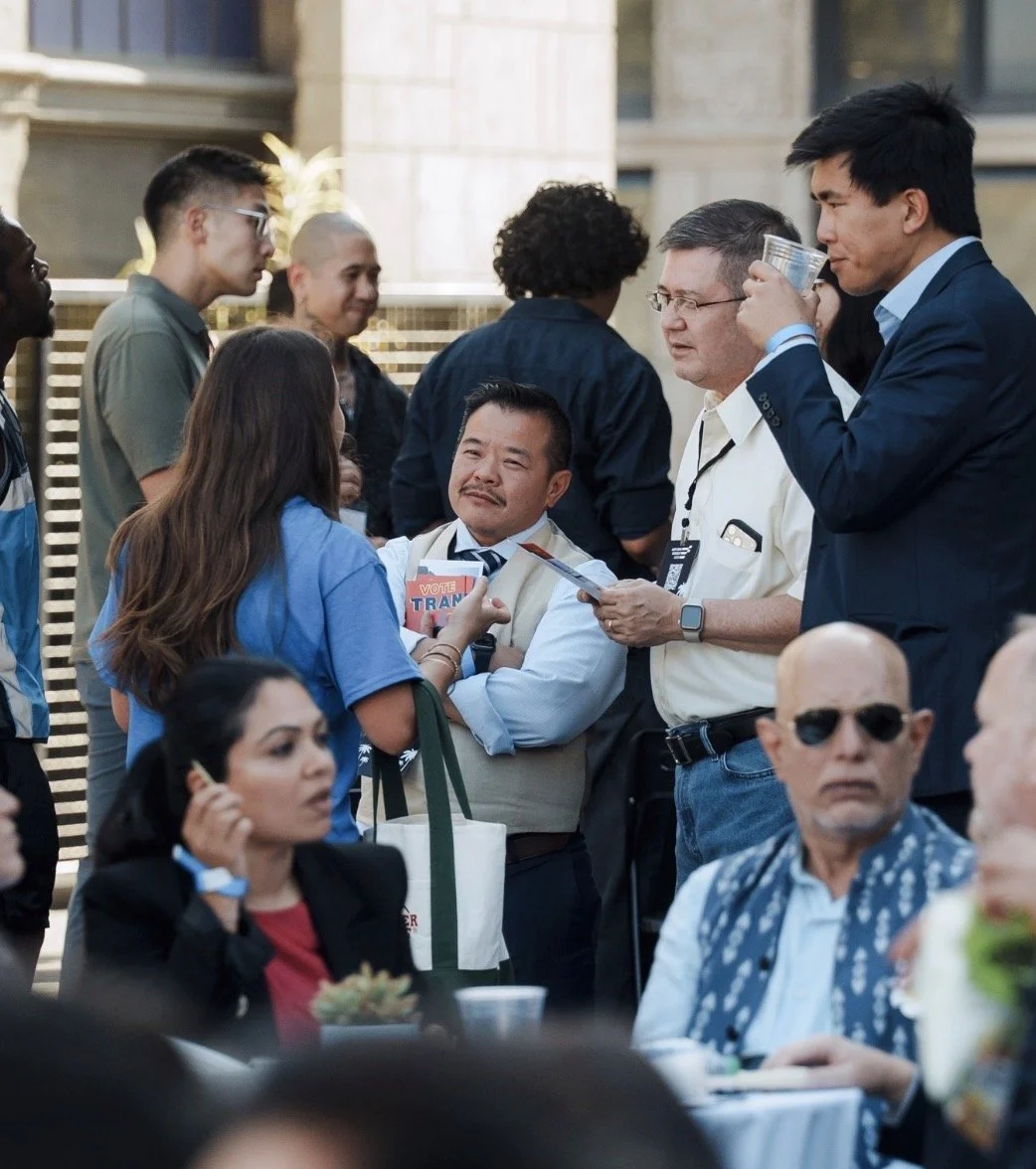
In a plaza full of elected officials, I quickly realized just how consistent voting behavior can be. Many people do not vote solely on policy. Politics is an arena where feelings champion the hearts and minds of voters. I assumed this would be different while canvassing the elected officials and community leaders buzzing around Chapman Plaza, but as I interrupted yet another tabletop conversation, it became clear that the policy issues my team and I fussed about for a month straight were perhaps less important. How we talked to voters, how we spoke about our candidate’s approach to governance, how we will address an individual’s most pressing concern, how people felt looking at our pamphlet at first glance — that is how you run an effective campaign.

For two candidates with seemingly identical policy platforms, I did not know what to anticipate leading up to the mock election. I read and reread the candidate profiles trying to find the best words to differentiate the two and spoke at length with the team to shape our candidate into the most concise language.

I found a lot of my time was spent explaining what the County Executive position is and how it came to be. There was mild confusion about whether the County Executive was a real position, whether this was a real election, and whether I was a real college student. But at the end of the day, I found the educational and research impetus of this mock election the most gratifying. To be the person that explains a role that will dramatically reform California politics to people for the first time made all the hard work over the past month worth it. Until LA County knows what’scoming onto their ballots in 2028, I can rest my canvassing-mock-election hat.

Blog 3: The Power of Us

By Alan Alexander, 2026 CLA Intern

Campaigning.

What appears to be an unassuming little act of smiling, parading around, and garnering support is in actuality a behemoth of pain, misery, determination, persistence, and heart. It’s a test of your character. In the words of former LA City Councilmember David Ryu and West Hollywood Vice Mayor Danny Hang, “it makes grown men cry.”

After serving as one of two campaign managers in the 2026 CAUSE Mock Election for the newly incoming Los Angeles County Executive, I can personally attest to the truth of these claims. If I could liken it to anything, I would put it on par with Navy Seal training (even though I’ve never been through Navy Seal training).

On the first day leading up to the Mock Election, I was assigned my teammates: Natalie (Field and Community Engagement Director) , AJ (Field and Community Engagement Director), Jayden Tran(Candidate), Kara (Finance Director), and Kayla (Comms Director). To continue this poorly constructed metaphor of Navy Seal training, they were my platoon or boat crew and the people that I would eventually go through every high and low with.

Day in and day out, our drill sergeant Nancy Yap would throw challenges at us. One day we would be assigned to create a policy platform, and the next communication materials such as our brochure, speech, and candidate statement. And though our journey was not without road blocks, leading to “crashouts” by some members, we soon found our flow through the power of teamwork. Eventually, we weren’t just six people cobbling to move forward anymore. We were Team Tran, and together we could climb any mountain and surpass any challenge.

Right as we reached this point of unified strength, we were faced by our final challenge, our hell week: the AAPI Lead Summit Community Reception and CLA Mock Election Night. These events, which formed one of the largest API conferences for Asian elected officials in the nation, would be where our mock campaigning and election would be held.

During this period, we we’re pushed to the brink. Even though some of us began to tire after talking with some elected’s–especially in the 90 degree weather–there were always more faces to converse with, more votes to gather, and more people to educate. We realized that campaigning wasn’t a competition against the other candidate. It was a really competition against ourselves, and how effectively we could work in the limited time allotted to us. And so in our hardships, we learned to be there for each other and to be the ones pushing each other forward when some of us lagged behind.

Fast forward to the end, the other candidate, Gabriel-Molina-Kong, ended up being elected. However, instead of drooping down in despair and desolation at our own failure, our team was filled with joy and relief. Because arguably the most important part of this election was not who won, but that we were together as one cohort and that we came out as stronger people.

This sentiment of love, unity, and strength even in the midst of friendly competition was one of the most important lessons I learned from this mock election. In our age of political and social polarization, the societal machine will do its best divide people and pit them against each other based their varied viewpoints. But perhaps real politics is not driven by how well we can argue the truth of our differences, but rather how well we can come together through the strength of our similarities.

So sure there might be Democrats, Republicans, Asians, Mexicans, and Caucasians. But before all that there are humans.

And sure there might be a Team Tran and a Team Molina-Kong. But first and foremost, there is the CAUSE family.

BLOG 3: Network is a synonym for community

By Sophia Pu, 2026 CLA Intern

Feet: hurting. Makeup: sweating off. Mouth: tired of talking. And yet, there was a nightmare scenario on repeat in my head that kept me campaigning: someone telling me they didn’t vote for my candidate because no one reached out to them.

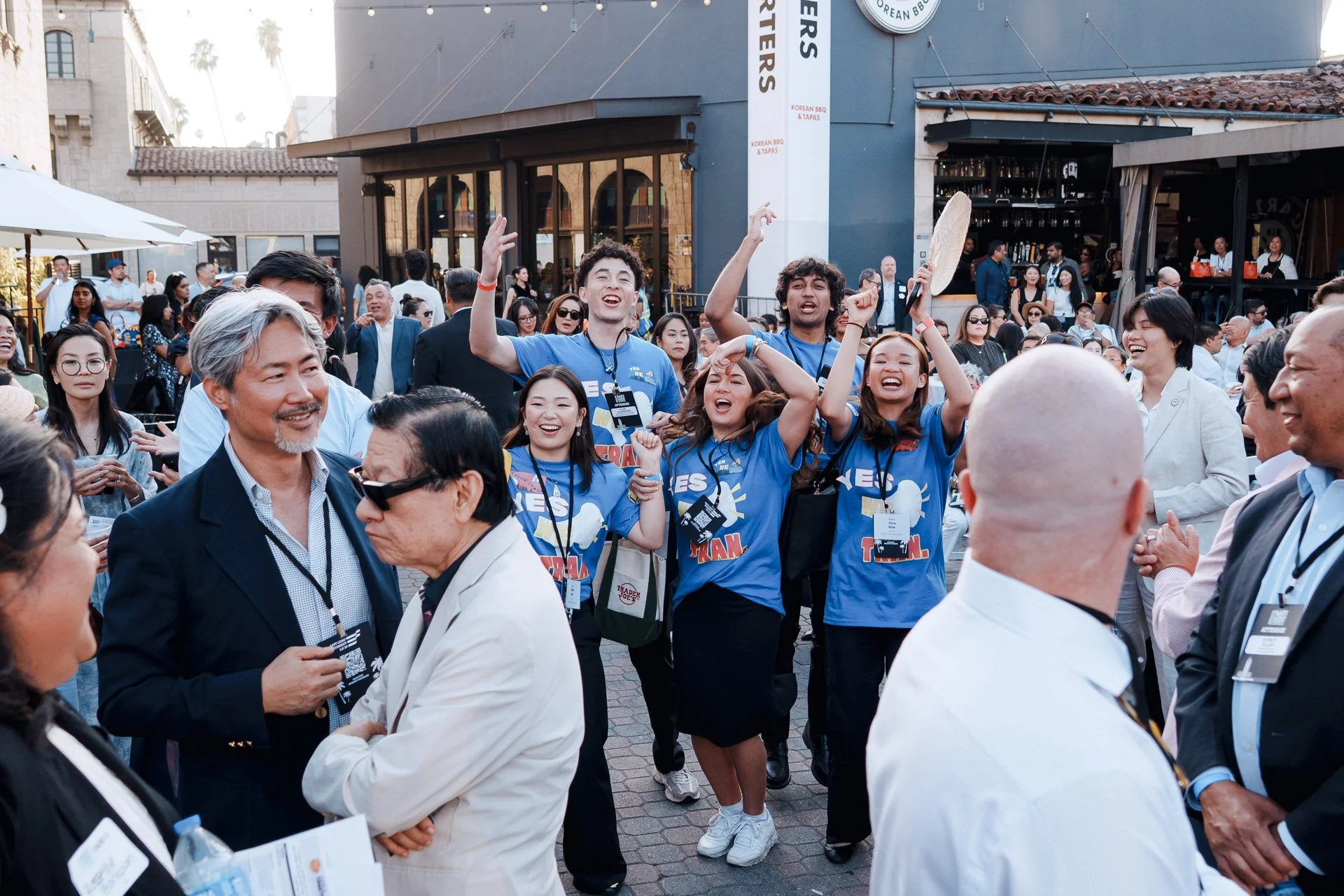
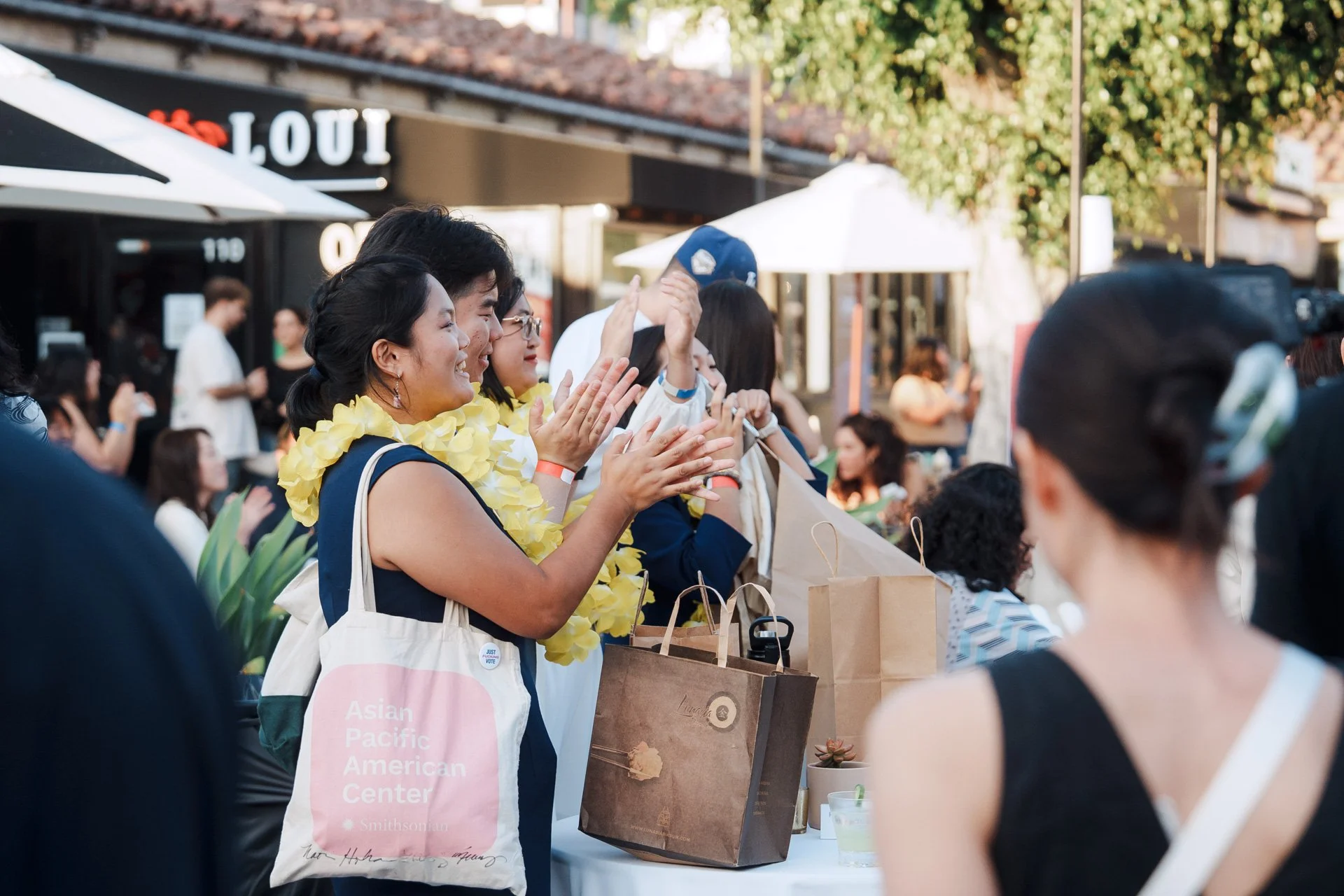
The time for hesitating to talk to people had passed hours ago. Whether it was reconnecting with people I hadn’t seen in months or forging entirely new relationships, I didn’t go five minutes without giving a spiel for my candidate, Gabriel Molina-Kong. When I got anxious over ensuring we spoke to each voter, I was comforted by seeing my team’s bright yellow leis scattered throughout the crowd and knowing each of them was giving their all. We didn’t stop until almost everyone at the event was wearing one of the yellow plumeria clips attached to our brochures.

The whirl of campaigning was exhilarating because I truly believed in the vision we were putting forward and I was confident that our ideas were well-researched. We spent dozens of hours wrapping our heads around county governance and crafting our platform. I laid out an hour-by-hour plan of where we would be, what we would be talking about, and how we were going to execute on election day. Of course, our plan went out the window as soon as we stepped into the AAPI LEAD Summit. As Dwight D. Eisenhower once said, plans are worthless, but planning is everything.

Not all of the campaign process was energizing. It was a struggle to approach people to network, let alone invite them to a fake election for a position that doesn’t exist yet. Where I expected to strike natural conversations at the AAPI LEAD Summit, I instead felt like a shark circling the lunch area, looking for prey. Gabriel faced detailed questions about positions he never actually held, while other members of my team overcame hostile confrontations.

What made it all worth it was the realization that “network” is just another word for community. I met leaders at the Summit who were fighting for AAPI representation in Alaska and Tennessee, reminding me that a seat at the table cannot be taken for granted. When I needed a break from pitching people who were only half listening, I took refuge in conversations with old friends like Alton Wang, PCC trustee, and new allies like staff in Assemblymember Al Maratsuchi’s office. At the reception, I got to see Kari Okubo, Karen Umemoto, and Chancee Martorell, the pillars of an Asian American studies class I took at UCLA. Seeing the strength of my network, or community, reminded me of Nancy’s lessons on networking being a team sport. I was surrounded by people I could lean on because they had paved the way before me and are walking alongside me now.

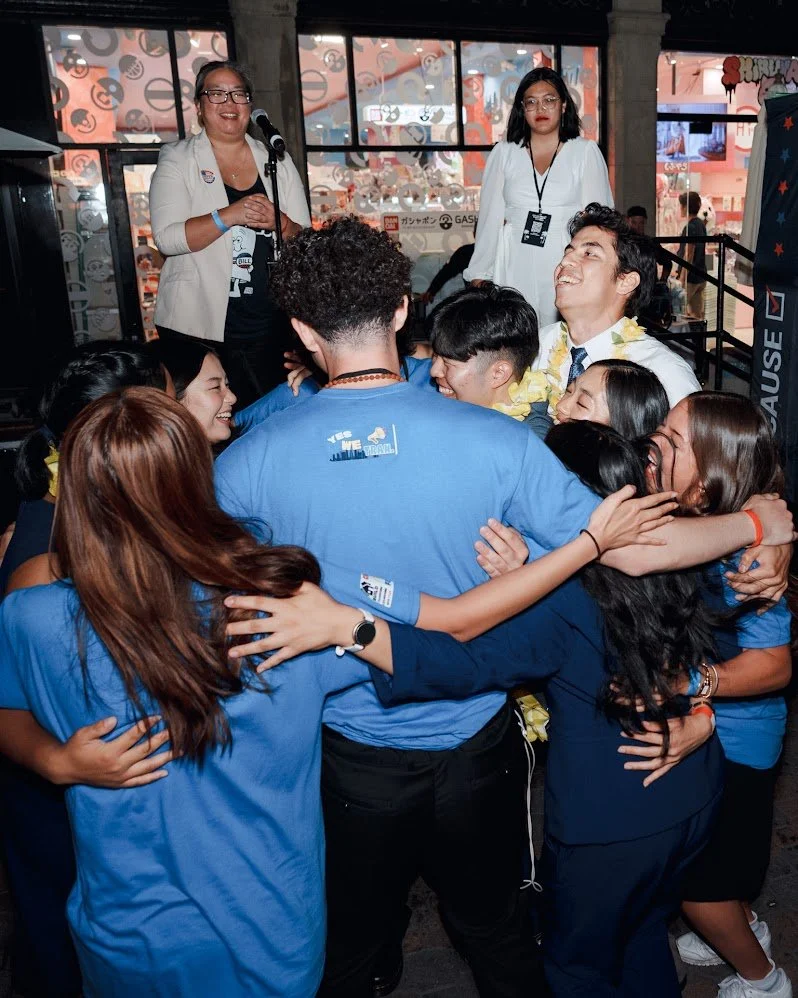
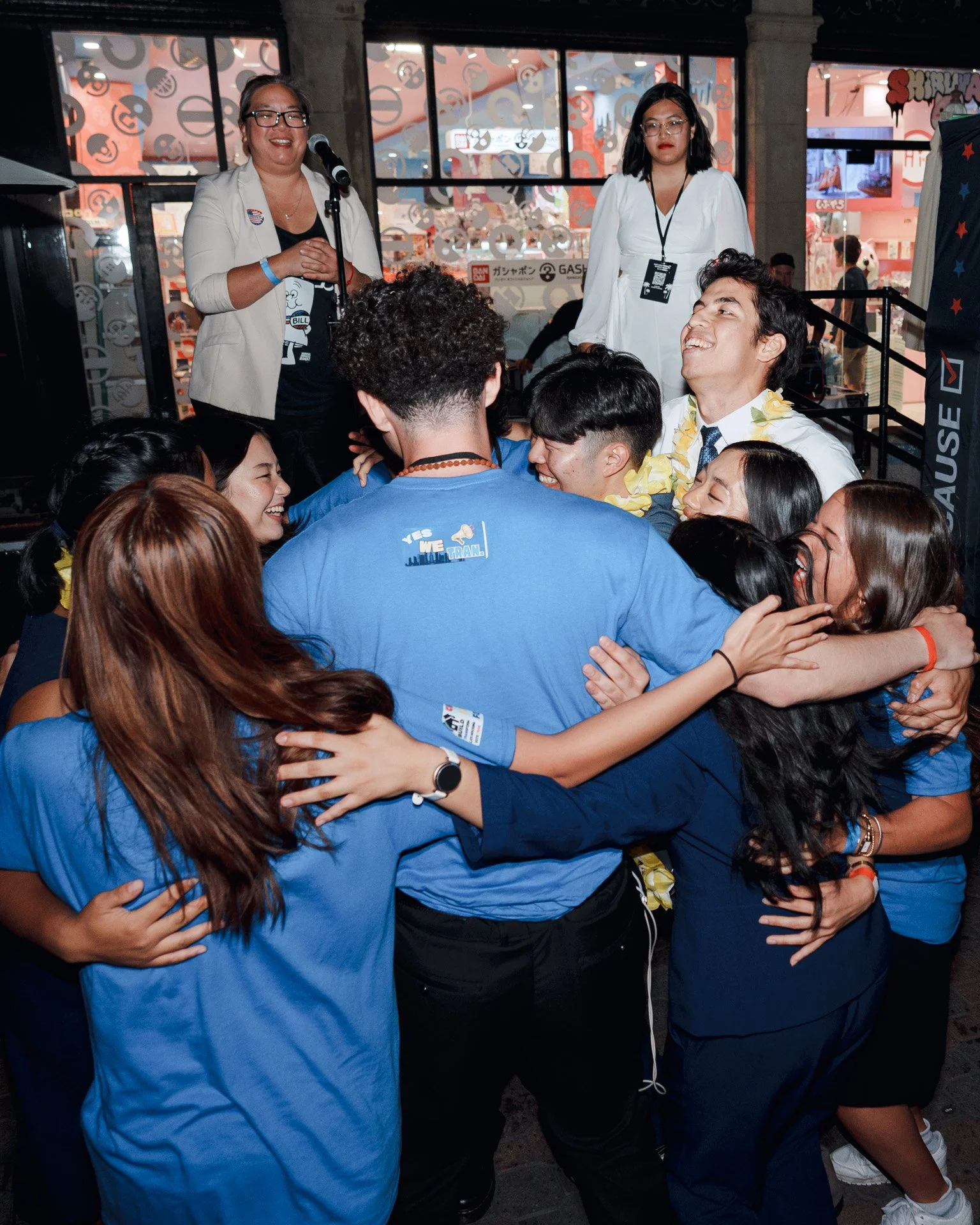
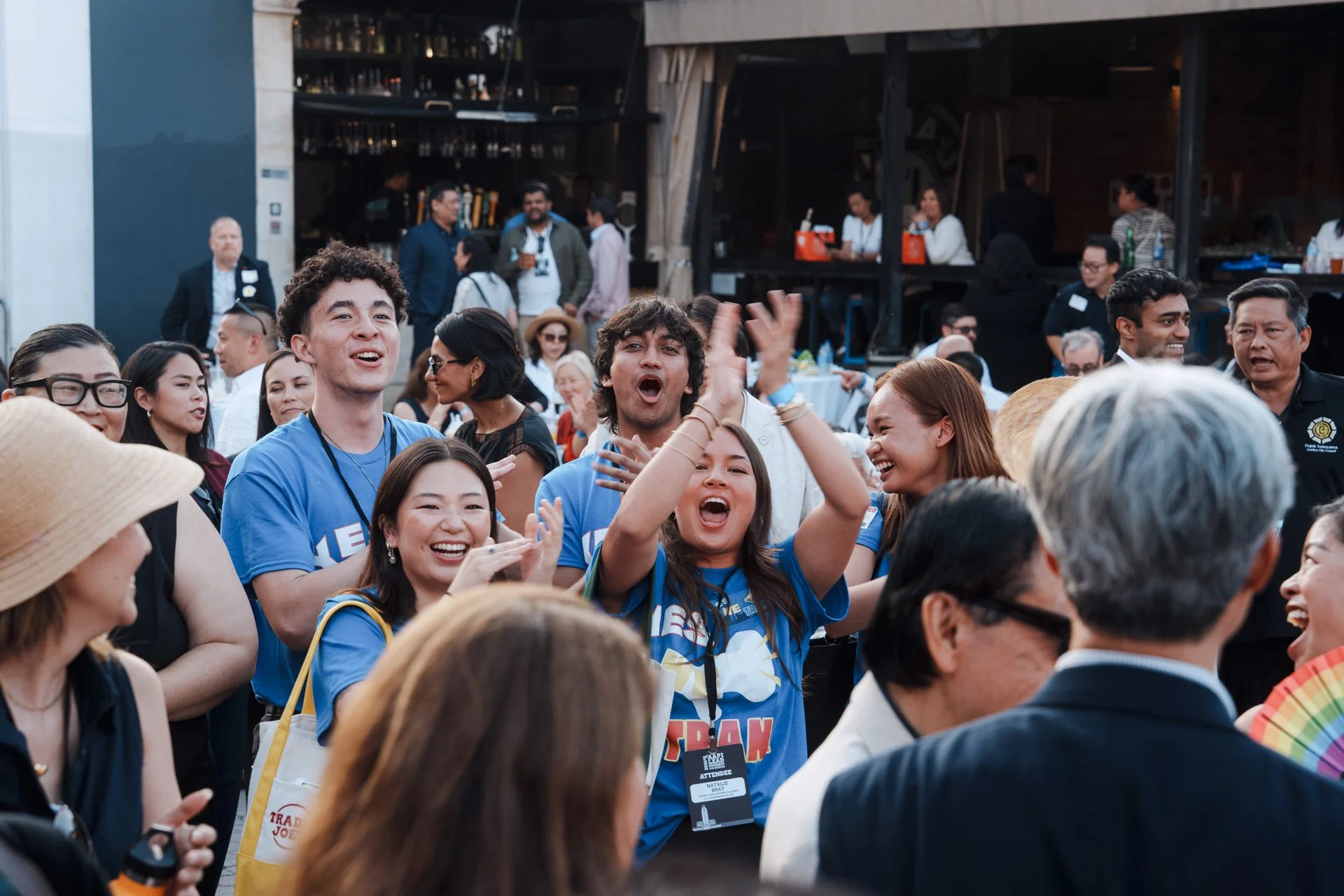
The highlight of election night for me was after Gabriel won and I ran to the other team with arms outstretched. We ended up in a giant group hug, jumping in a circle to Kendrick Lamar’s “Alright”. After all the blood, sweat, and tears we put in together, it was the perfect moment of catharsis.

Blog 3: Fixed In Post

By Jayden Tran, 2026 CLA Intern

During high school, my business team took staff pictures for our departments. When the time came for my two-person department, I stepped away from the camera to be photographed; as a peer of mine took the shot in my stead, I heard my teacher yell from behind the camera — “Jayden, you need to tame your hair. It’s too poofy — Can you fix it in post?” Ever since, I often look back at photos and question my appearance.

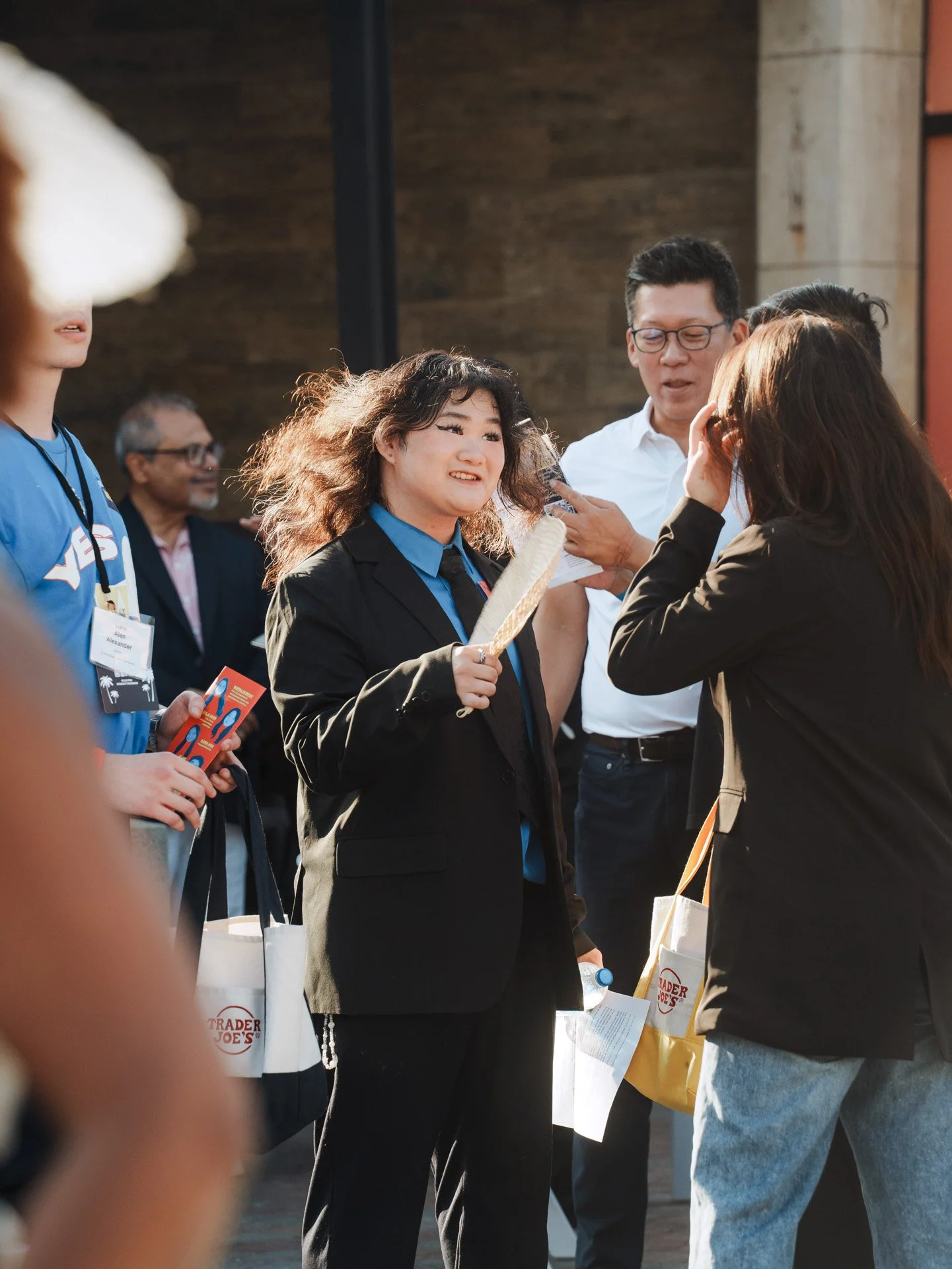
In politics, candidates don’t look like me — no dyed or frizzy hair, dramatic makeup, or vivid outfits. As my professor for “Mass Media/American Politics” alludes, your appearance is the first and last thing a voter will judge you on in your campaign. It’s also likely that politics will continue to be a sport where policy is spoken, but appearance is key. It’s why politicians love photo ops and translucent powder and why “looksmaxxers” on social media are beginning to influence everyday politics (funnily enough, this was the heart of my political science thesis idea).

I found myself viewing the photos from CAUSE’s Community Reception with a critical eye. Would we have won the election if my eyes weren’t bloodshot from the stress of a family issue the night before? If my blazer sat on me more comfortably? If my hair wasn’t so… “unruly”? As I gave my concession speech, I thanked voters regardless of who they voted for, making informed decisions to decide the future of LA County. But in the back of my mind, I questioned what I could have edited in post, both on the inside and the outside, to have secured a victory.

But soon, I realized those thoughts were all bygones.

While my appearance could be fixed in post, my policy couldn’t. Neither could my dedication, my commitment to marginalized identities, or my desire to change an issue. Speaking to voters, I put my heart on my sleeve, and so did my team. We discussed issues that directly impacted us, policies that would support our families, and hopes for the futures of our communities.

I resonated with the stories of voters, who told me their own narratives of feeling pushed to the margins of government. Being endorsed by the likes of Hon. Manufou Liaiga-Anoa’i, Mayor Paul Seo, State Senator María Elena Durazo, Lake County Treasurer Holly Kim, and more showed me that people from across the aisle can support a candidate who brings about transformative change, one who comes from and represents the people rather than egotistically deciding things for themselves.

What mattered to me most in that moment was not how I looked — that’s something I could mull over in post; instead, I focused on delivering the very transformative future of politics that I’ve envisioned since I was a kid. I didn’t care about how poofy my hair was or the sweat from the sun beating down on my face. As I spoke on stage, I only cared about taking space in a plaza full of people who would have never expected me to try bringing a seat to the table, showing them that they must pay attention to the communities I belong to: queer; low-income; (formerly)unhoused; disabled; Asian; etc.

I am unabashedly myself, but that doesn’t mean I’m confident. Sometimes, I wonder if conforming to “the standard” is a better decision as I move forward in my career. Throughout the campaign and on election night, comments about my appearance, some well-intentioned and others less so, made it difficult not to wonder if there is a version of myself more suited for politics. But now, when I’m confronted with these hesitancies, I’ll forget the voters commenting on my appearance and remember the many voters I spoke to who told me I’m doing the “good work” for representation, who exclaimed I was a “breath of fresh air”, who said my story was a vision of inspiration for a future politic that includes the marginalized, rather than disenfranchising them further.

In many ways, I knew what I was signing up for when I threw my hat into the ring to represent my group. When I’m behind the camera, I can control the narrative through edits and touch-ups in post; I knew that this wouldn’t be possible once I stepped in front of the camera and took the stage to campaign.

But none of that mattered throughout our reception. My team reassured me, allowing me to focus on the night at hand: Natalie, always making me smile in photos; AJ, commenting on my aura; Kayla, making sure I was eating; Kara, bouncing around, speaking to everyone I missed; Alan, putting me in contact with another random contact he knew.

These moments of camaraderie, of support, of connection are not always memorialized in photos, but they are the memories I’ll remember most as I think back to election night. And those hold more weight than any of the changes I would have made to my campaign after the fact.

Although I still catch myself wondering what I could have edited in post, when I think back to election night, I remember the voters, the stories, and the community long before I remember the photos.

Blog 3: Mock Election and Real Reflection: A Synopsis of Campaigning

By Natalie Bray, 2026 CLA Intern

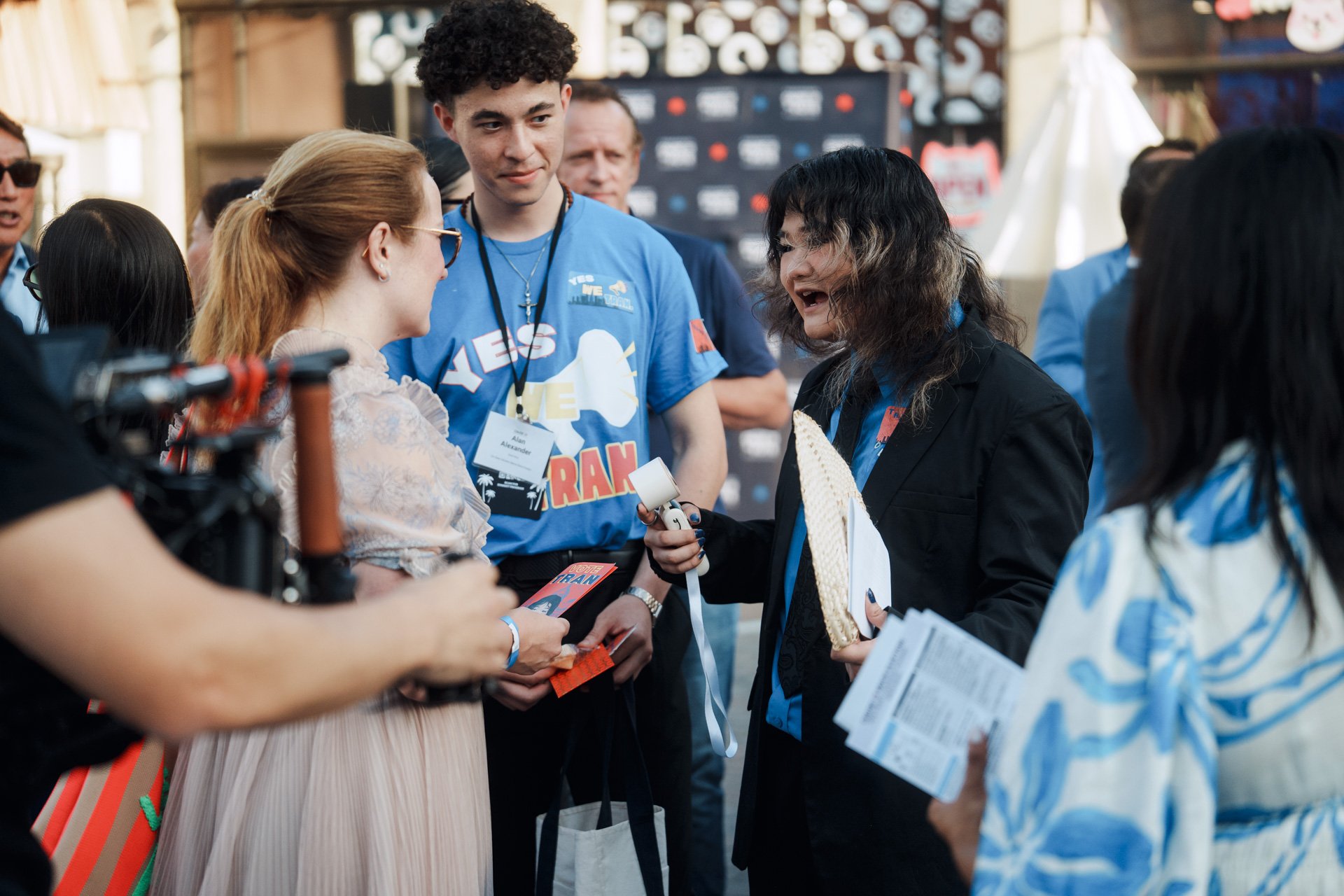
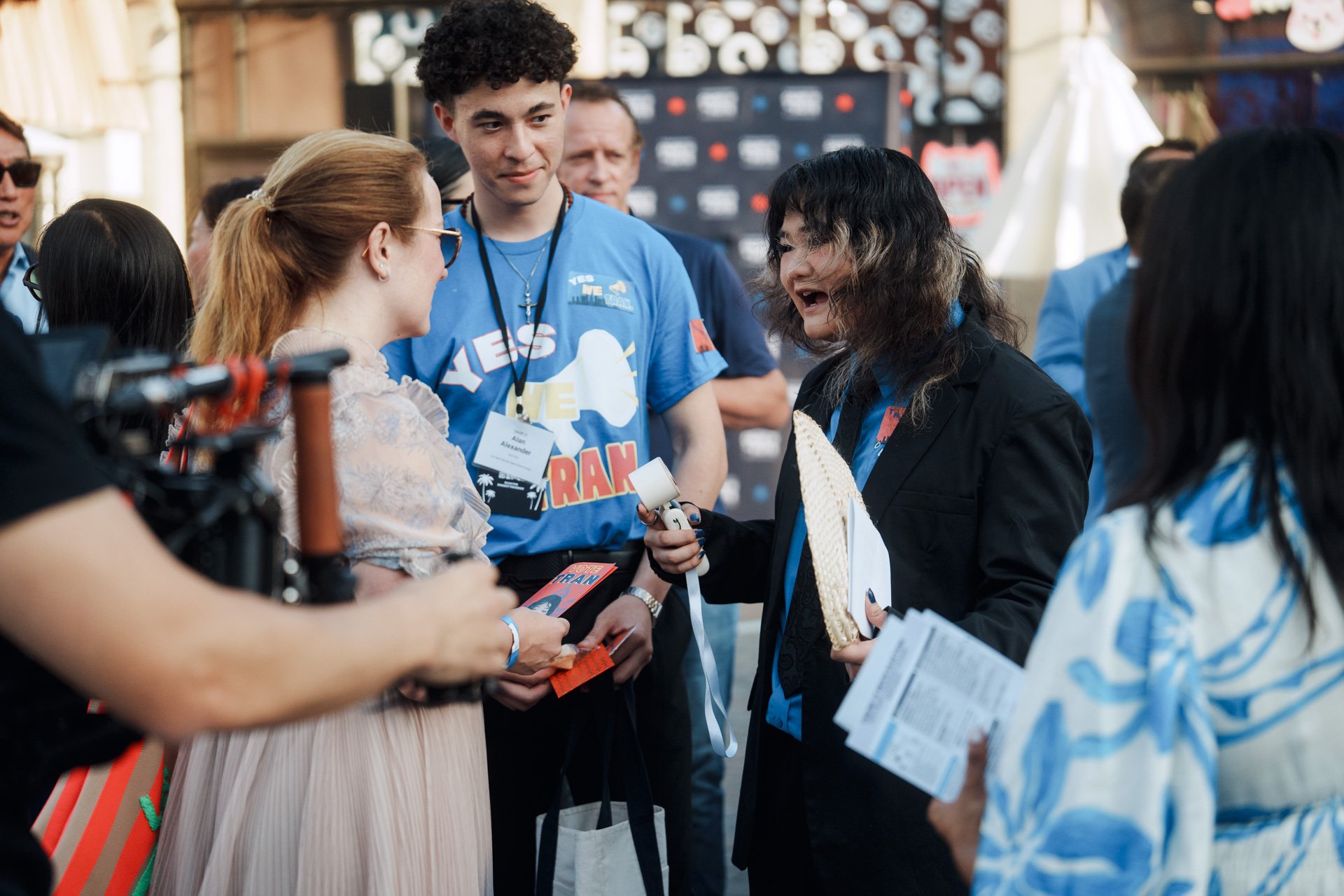
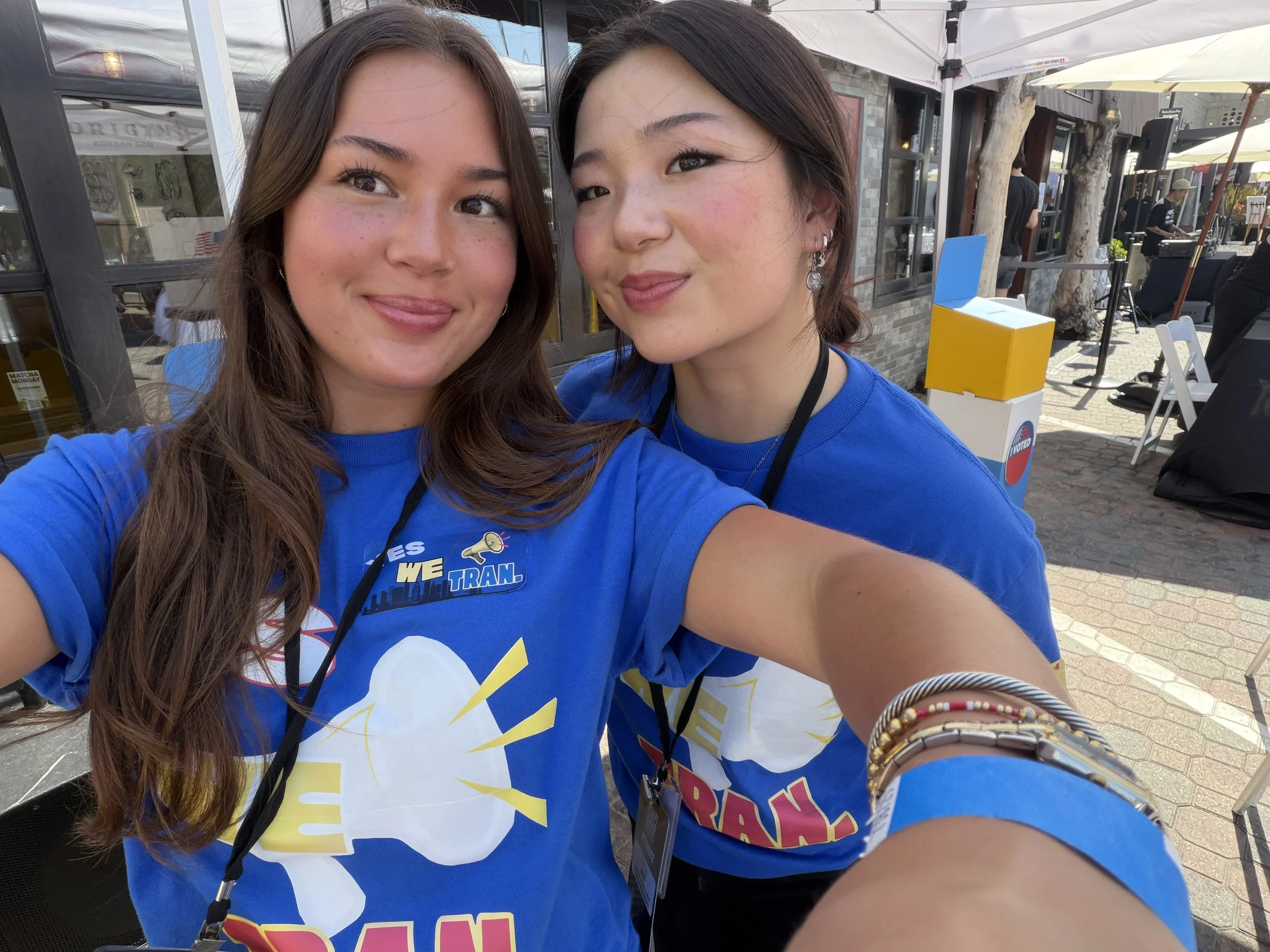
“Yes We Tran!” Me and my team, composed of Kayla Mar, Alan Alexander, Kara Mak, Abhishek Jagannathan, and of course our candidate Jayden Tran, chanted this phrase after getting urged to do so by Lake County Treasurer Holly Kim prior to our candidate’s speech. Teammates, Treasurer, and Tran: the three T’s of the night perfectly encapsulate the mock election and its aim towards providing the cohort not only with faux campaigning experience, but also an opportunity to grow into ourselves as young professionals.

The mock election canvassing began in the morning at the third annual AAPI LEAD Summit held in Los Angeles, California. Going into this morning's event, I was nervous, as I had never helped on a campaign before, nor canvassed for a candidate (let alone having that candidate also be my friend). Going up the escalator, I did not know what the day held for me, and also wondered if people would even give me the time of day to give them my rehearsed pitch about Measure G and the newfound LA County Executive position that would be going into effect after the election in 2028. Brochures and red envelopes in hand, I paired up with my teammate AJ in order to begin our canvassing journey. 

Our first gameplan was to go into the actual stage area, and find individuals to talk to who were making their way out of the previous panel discussion. We ran into Susan Jin Davis, Chair of the AAPI LEAD Foundation Board of Directors, and a woman who I had done research on for the day prior, when my boss Congressman Ted Lieu was on a panel in which she was introducing him. Tentatively, I stood by her and her comrade who she was in conversation with before she turned to me with a big smile. AJ and I ended up having a lively conversation with her about what we were campaigning for, what our internship at CAUSE consisted of, and if we would see her at the reception later in the day. Through jokes being cracked and laughs being shared, all of my anxieties were eased. She even gave us other individuals to talk to, who also shared Susan’s friendliness. AJ and I continued on talking to people at the summit, from interns to public officials, from welcoming to dismissive. All of which were important interactions that helped me not only gain more knowledge about the most pressing issues that people cared about in the political sphere, but also how to interact with individuals of all backgrounds and political positions. 

At the reception, vibes were high. The energy was up, people were lively, and I was confident. Going off on my own this time, I was able to talk to so many individuals I had met earlier, and also new ones. When we all gathered to listen to candidate speeches, I truly felt empowered by both of our candidates, and was so proud of everyone in the cohort for their hard work and dedication to our communal research project and campaign. It truly felt like we had an important role in the work we were doing through our education on Measure G and the Los Angeles County Executive, and I look forward to seeing this all play out in real time in 2028. I would say this day was pretty TRANsformative.

Blog 3: A Day of Canvassing, A Lifetime of Support

By Kaitlan Sakuma, 2026 CLA Intern

The mock campaign for LA County Executive taught me more about organizing in one night than any textbook could. Supporting Gabriel Molina-Kong’s candidacy meant more than drafting policy platforms or perfecting our slogans – it felt like stepping into the actual rhythm of an authentic campaign. From the real conversations to the collective exhaustion, campaigning for twelve hours straight was quite humbling yet extremely rewarding.

Campaigning and being in politics requires thick skin. Not every door opens with warmth, and not every conversation lands the way you hope. But what the mock campaign night really taught me is that a food support system is just as important as thick skin – especially during something as demanding as canvassing. It was in the middle of that same exhausting night that I found some of the most meaningful connections, and they reminded me of why having people in your corner matters so much in this work.

For one, my cohort was an incredible group to lean on throughout the entire day. Even though we weren’t all on the same mock election team, we shared a common goal, and by the end of the night it was clear that we were all still part of one CAUSE family – something I am endlessly grateful for. Making sure everyone stayed hydrated and checking in on each other throughout the night made me feel grounded, and reminded me of our common goal: educate voters and explore our own personal values along the way.

There were two groups I met at the conference that left a lasting impression on me. The first was a group of union organizers representing healthcare workers, who invited me to eat with them during the conference. What struck me wasn’t just their passion and expertise in labor organizing – it was how much they genuinely cared. They checked in on me throughout the night, made sure I was pacing myself, and reminded me to take breaks. In a space that can feel relentless and high-stakes, their care reminded me that organizing requires people to look out for one another.

The second group was a set of educators, and given my own interest in education policy, I found myself gravitating towards them instantly. We ended up talking more about my past research and academic interests than we did about campaign strategy. They were genuinely curious about my work and I truly got to be myself, as someone excited to talk about the education system with people who understood why it mattered.

What made the night so powerful wasn’t just the act of campaigning itself but the fact thatI was doing it alongside AANHPI leaders from across the country – people who had built careers in organizing, labor, and education. Sitting with the CAUSE family next to ChaRedefined in the Chapman Plaza at 1am, I understood something I couldn’t have grasped from a lecture: campaigning demands persistence and humility, but behind every campaign are people who choose, again and again, to show up for one another. Having that kind of support system behind you is key, and experiencing it firsthand made me excited to keep showing up as that support system for the CAUSE family, too.